Now Available: econext 2025-26 Annual Report

econext is pleased to announce the publication of its 2025-26 Annual Report.

This has been an incredibly productive year for the organization. We invite you to take some time to explore the many accomplishments of econext’s Board and staff throughout 2025–26.

As always, we welcome your feedback. Please don’t hesitate to reach out to our team with any questions or comments.

Read the Report

International Women’s Day 2026

Celebrating Women Driving the Green Economy

March 8 marks International Women’s Day, a global celebration of the achievements of women and a reminder of the importance of advancing equity across all sectors. From science and policy, to entrepreneurship and community leadership, women have played a vital role in shaping the world we live in today.

In the green economy, women are helping lead the transition toward a more sustainable future. Across industries and communities, women are advancing environmental, social, and governance (ESG) initiatives, developing innovative climate solutions, and championing sustainable practices that support both people and the planet. Research continues to show that organizations with greater gender diversity are more innovative and better equipped to address complex challenges. Inclusive leadership is therefore an important part of building a resilient green economy.

At econext, we see this impact firsthand. Women play a major role in shaping econext’s work, representing nearly half of our Board and the majority of our leadership team and staff. Their leadership, expertise, and perspectives help guide our programs, partnerships, and initiatives across the province. We are committed to continuing to build the green economy as a diverse, inclusive, and accessible sector that benefits from a wide range of experiences, ideas, and perspectives.

This International Women’s Day, we celebrate the women who are helping lead the transition to a greener economy, both within our organization and across our network.

Stories from Women in the Green Economy

Below, you can read stories from some of the women helping shape the green economy. Their experiences highlight the many pathways into sustainability careers and the important role women continue to play in driving innovation, collaboration, and climate action.


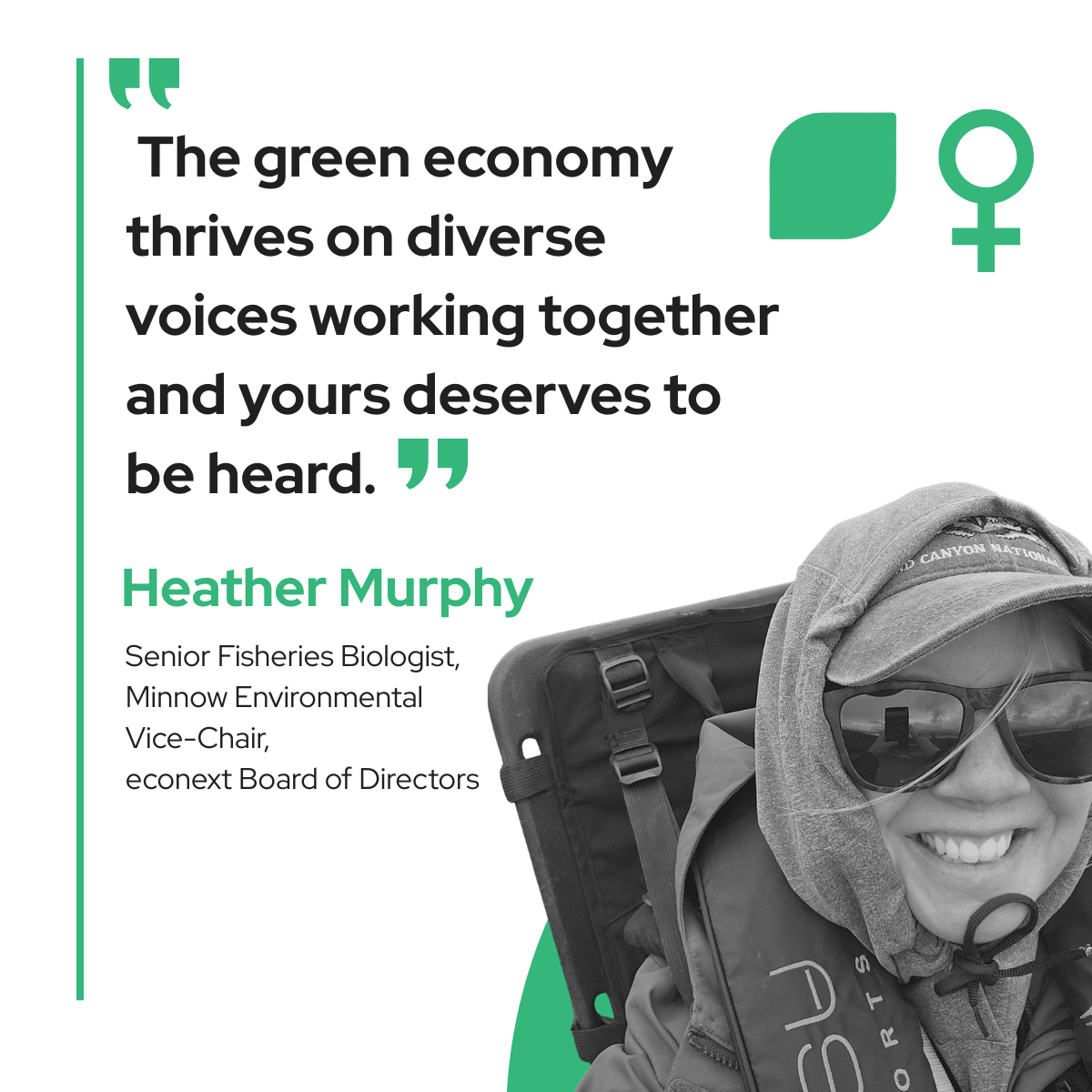
Heather Murphy, Senior Fisheries Biologist, Minnow Environmental & econext Board of Directors Vice-Chair


Can you share how your journey led you to working within the green economy?

My interest in the green economy started long before I entered the workforce. I was fortunate to have professors who encouraged curiosity and exploration early in my academic journey. They saw potential in the questions I asked, and their enthusiasm helped shape my understanding of how science can be used to protect ecosystems and support sustainable economies.

Another part of my journey was learning to say “yes” whenever I was invited to the table. Whether it was a research opportunity, conferences, field project, or a conversation with people working in areas I wanted to understand better. Each “yes” opened doors, strengthened my skills, and connected me with mentors and colleagues who showed me how science and sustainability intersect in practical, meaningful ways.

Those experiences naturally led me toward fisheries biology and environmental stewardship, where every decision has both ecological and economic consequences. Working in the green economy became a way to align my curiosity, my values, and my desire to contribute to solutions that support both the environment and the economy.

Have you faced any barriers in your career? If so, how did you overcome them?

I’ve certainly faced barriers, and one of the most important lessons I learned early on was to be honest about my abilities. Instead of pretending to know everything, I made it a habit to ask questions, seek guidance, and invite feedback from my teammates, mentors and senior leaders whose perspective I respect and appreciate.

Being transparent about what I didn’t yet know didn’t hold me back though. It helped me learn and advance faster in my career. It also built trust within my teams, because people knew I was committed to doing the work well and not just appearing confident. And now, 16 years into my career, I still take this same approach. The learning is never done. Every challenge, conversation, and project adds something new, and staying curious and communicative has been one of the most reliable ways to move past obstacles and continue growing.

Another key lesson was realizing that no one overcomes barriers alone. The best progress happens when you lean on a team. Barriers are overcome when you collaborate, share knowledge, and support each other through the challenges. Recognizing that helped me navigate tough situations with more resilience and far less hesitation.

What message do you think is important for young women entering the green economy?

One of the most important things young women should know is that your voice is a powerful tool! Communication is foundational in the green economy. Whether you’re sharing scientific findings, collaborating across disciplines, or engaging with communities, the ability to communicate clearly and confidently will amplify your impact.

Say yes to opportunities to speak up, ask questions, and contribute to discussions. Even when you feel uncertain, your perspective brings value, and the only way to grow those communication muscles is through practice.

Remember that you don’t have to know everything at the start. What matters is staying curious, being willing to learn, and showing openness in your conversations with mentors, peers, and partners. And just as importantly, understand that progress in this field rarely happens alone. Strong communication within a team, being transparent, listening actively, and sharing knowledge helps turn challenges into collaborative solutions. The green economy thrives on diverse voices working together and yours deserves to be heard.


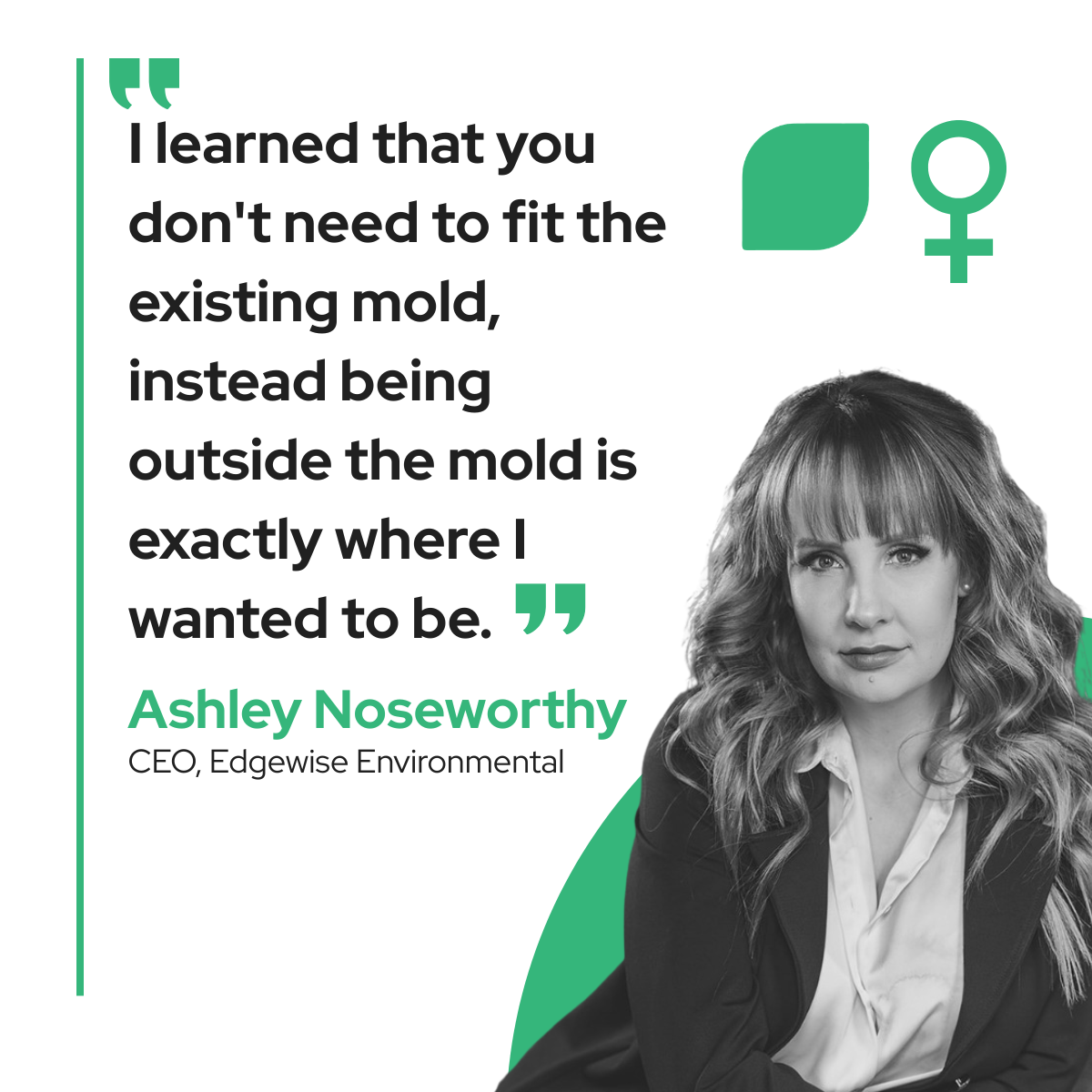
Ashley Noseworthy, CEO Edgewise Environmental


Have you faced any barriers in your career? If so, how did you overcome them?

The marine and industrial sectors and even entrepreneurship have historically been male-dominated, and as a female scientist, founder and CEO, I’ve certainly navigated my share of “only woman in the room” scenarios. Early on, the biggest barrier was often credibility. Whether it was securing investment or leading technical training, there was an unspoken pressure to prove I was twice as capable just to be seen as equal.

I overcame these hurdles by focusing on unapologetic competence and community. I leaned into my expertise, let the results of Edgewise speak for themselves, and sought out mentors, who valued innovation over tradition. I learned that you don’t need to fit the existing mold, instead being outside the mold is exactly where I wanted to be.

What message do you think is important for young women entering the green economy?

To the young women considering a profession in the green economy: don’t wait for an invitation. This sector is being built right now, which means there is a unique opportunity to design the rules of the game. We need your perspective, your problem-solving skills, and your leadership to solve the climate crisis. The “green economy” isn’t just one thing, it’s engineering, policy, biology, marketing, economics, and entrepreneurship (and so much more). Find the intersection of what you love and what the planet needs, and go after it with everything you’ve got.


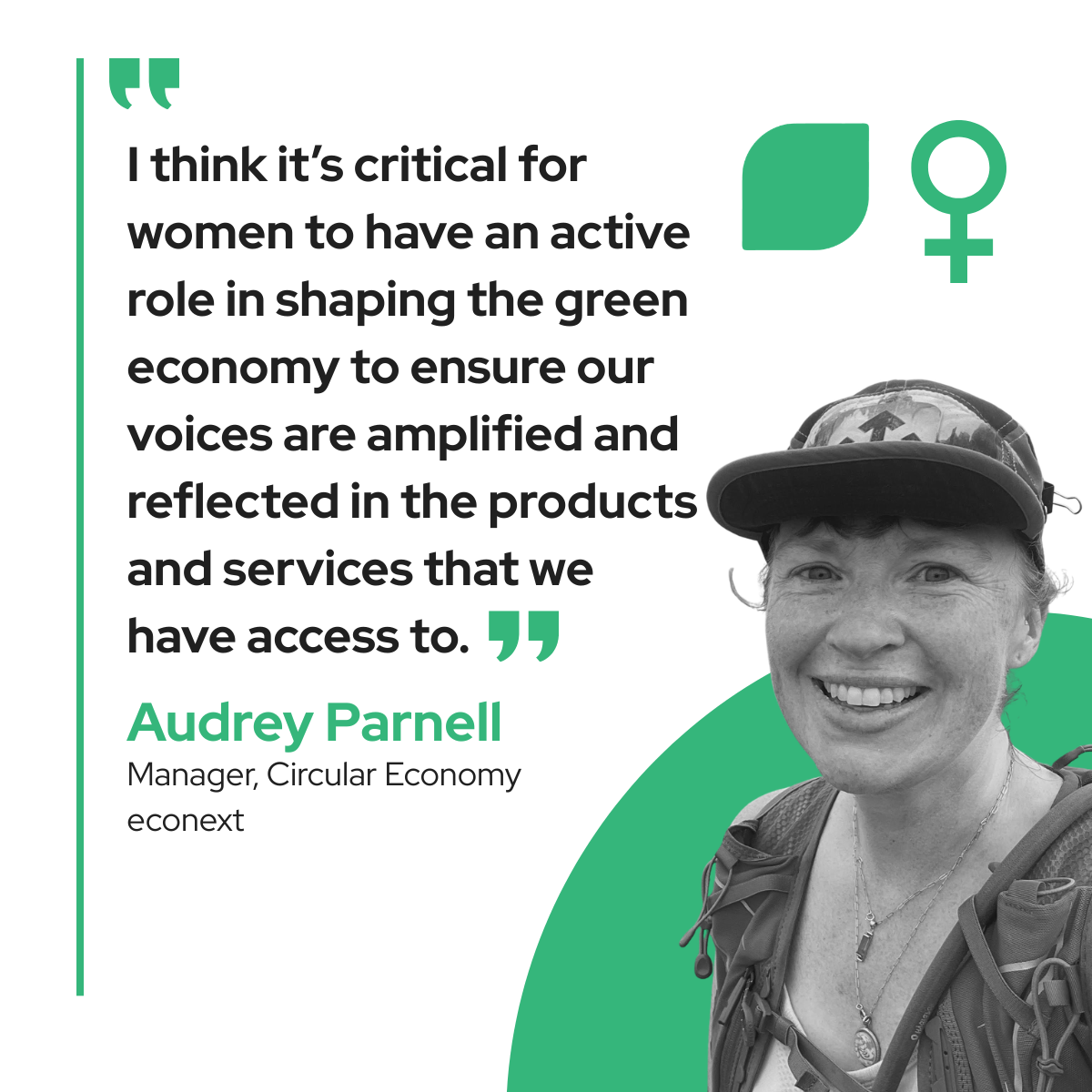
Audrey Parnell, Manager, Circular Economy, econext


Can you share how your journey led you to working within the green economy?

I have always loved the outdoors since I was a child which led me to my BS and MS degrees in Geology – I can get a degree in hiking?! With geology I was able to go from working in Oil&Gas, to climate consulting, and now work at econext in exploring the opportunities to find value in waste. Being a part of the world and thinking about the planet has always been a core part of my life and I am excited to be at this inflection point where we can transform industry towards sustainability.

What message do you think is important for young women entering the green economy?

I think it’s critical for women to have an active role in shaping the green economy to ensure our voices are amplified and reflected in the products and services that we have access to. Women are central to shaping a low emission future through working as engineers to find clean power to as designers developing reusable products.


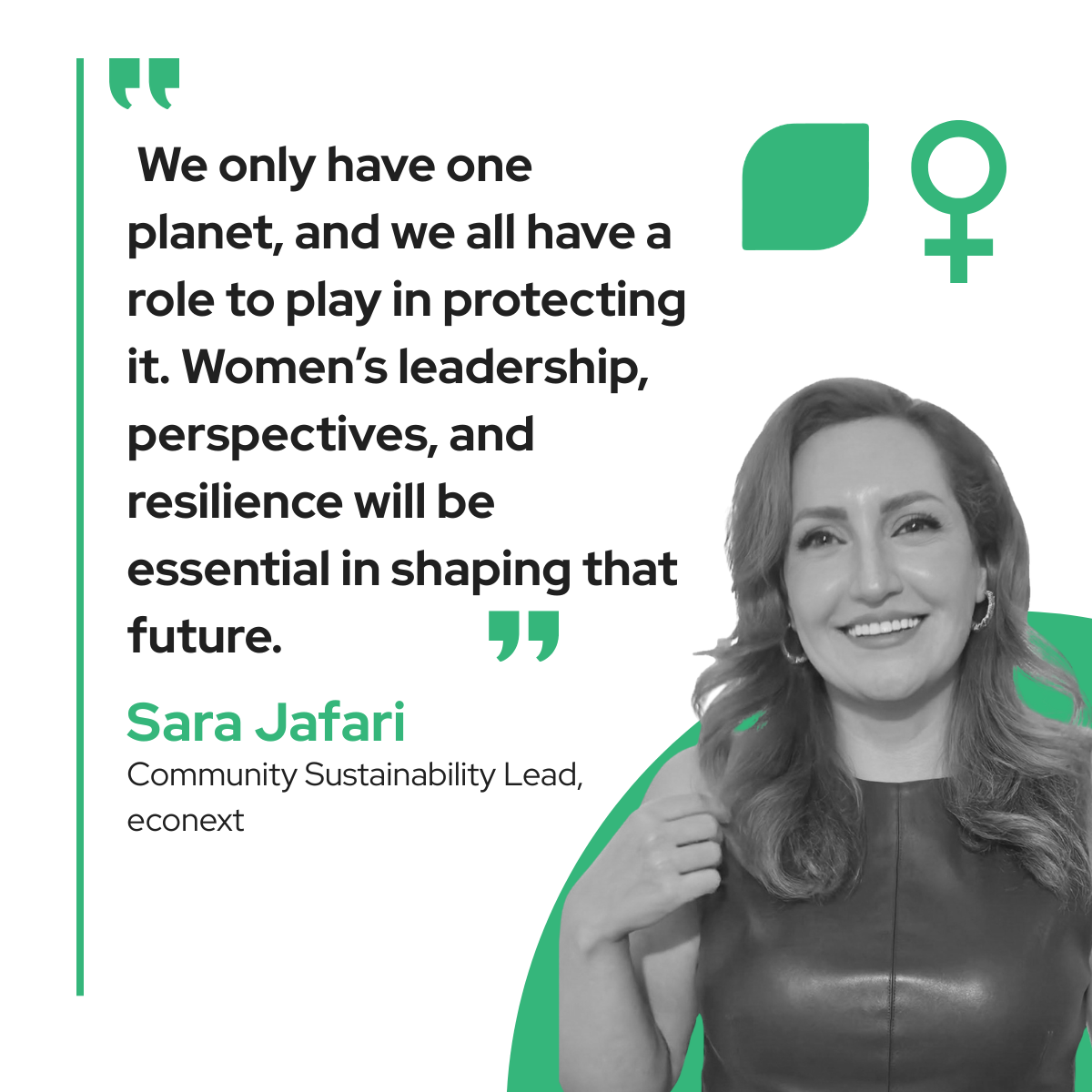
Sara Jafari, Community Sustainability Lead, econext


Can you share how your journey led you to working within the green economy?

My journey into the green economy began with my background in geomorphology and climate studies, followed by a master’s in urban planning, where I focused on the environmental aspects of sustainable urban growth and development. Earlier in my career, I worked in the cleantech and renewable energy sector, which strengthened my interest in sustainable solutions and project management. After moving to Canada and studying MBA at MUN, I had to rebuild my career from scratch. Working with econext allowed me to reconnect my planning and environmental background with climate action, particularly through initiatives like the Net-Zero Communities Accelerator, where I collaborate with NL municipalities and industry partners to support more sustainable and resilient communities.

Have you faced any barriers in your career? If so, how did you overcome them?

As an immigrant woman building a career in Newfoundland and Labrador, one of the biggest challenges was rebuilding my professional network and establishing credibility in a new environment where my previous experience was not always immediately recognized. In smaller communities, professional networks can be tight-knit, which can make career development more challenging for newcomers. I overcame these barriers by continuing to strengthen my expertise, building meaningful professional connections, actively contributing to my projects, and staying focused on the impact I wanted to create. At the same time, I was fortunate to receive support and encouragement from generous colleagues and community members along the way. That support made a real difference, and today I try to pay it forward by supporting and mentoring others whenever I can.

What message do you think is important for young women entering the green economy?

The transition to a sustainable and low-carbon economy requires purpose-driven and solution-oriented people. My message to women entering the green economy is to approach this work with a problem-solving mindset and a strong sense of purpose. Climate action is complex, long-term, and often challenging because the required changes are systemic. But the goal is clear: protecting our environment while building stronger, more sustainable economies and communities. This work can feel like an endless journey, but we do it because we have a responsibility to future generations. We only have one planet, and we all have a role to play in protecting it. Women’s leadership, perspectives, and resilience will be essential in shaping that future.


Ashley Smith, Owner, Fundamental Inc.


Can you share how your journey led you to working within the green economy?

I’ve always been interested in ‘environmental’ things, it’s been clear to me since my late teens that we need to do a better job of interacting with nutrient and energy cycles of the planet. I got a Bachelor’s degree in population genetics with a minor in chemistry, that led me to work in the area of ‘environmental science’ generally, which led me to become the sustainability coordinator for an urban planning and architecture firm, which led me to LEED and energy efficiency, then I got a Master’s degree in civil and municipal engineering, which led me to construction. I started my own firm when I was pregnant with my first child. I wanted to be the change I wanted to see with respect to action on climate change. And now I’ve been succesffully running Fundamental Inc for 10 years, with each year growing to new clients and new exciting projects. I’m very proud of our B Corporation Status, of the $33Mil in funding we’ve brought to the province for our clients, and that we’ve decoupled our GHG emissions from Fundamental’s economic growth – our 2024 emissions were 32% lower than our 2019 emissions despite our annual revenue being 2.5 times higher. (2025 stats will be ready soon!)

Have you faced any barriers in your career? If so, how did you overcome them?

There are always barriers. A struggle is hard to deal with at the time – but it does build character; and I have learned more, and faster, from my ‘failures’ than I have from the majority of the ‘good times’. Most of what I would call success in life has been finding ways to deal constructively with adversity. I am not a confrontational person – in fact, I will go seventeen ways from Sunday to avoid open conflict whenever possible – but, when push comes to shove, I will stand firm and hold my ground with respect and kindess (or solid preparation, evidence, and determination – as the situation warrants). I’m a firm believer that what you get out of life is directly proportional to what you put into it. In my experience owning and running a business – you have to see the hard work as a given, be primarily motivated by something deeper than accolades and money, and hope that you get a few lucky breaks. I am a profoundly pragmatic person – when you know something isn’t right, it isn’t – acknowedge it (freak out in a safe place if you need to), get over it (breathe – this too shall pass), and move towards what works (stopping every now and again to hug your family and smell the roses).

What message do you think is important for young women entering the green economy?
I would say this is true for all disciplines and industries, and all humans in general really – care enough about the thing you’re doing to do the work needed to get good at it. Short cuts are trouble. Take responsiblity for your actions and what you bring to the table. Lean into helping others around you – especially in NL where the market is small enough that relationships really matter. Abandon ‘protectionist’ notions and remember that a rising tide really does lift all ships. I tell my kids all the time – teamwork really does make the dream work.


Call for Interest in econext’s Board of Directors

Call for Interest - 2026-2028 Board of Directors

In April, econext will elect board members for 2026-2028.

econext‘s board of directors provides direction and support to the organization’s staff in their work to support economic growth in Newfoundland and Labrador that is environmentally sustainable. There are a total of four (4) positions to be filled.

Nominees are asked to provide:

  1. a high-resolution headshot
  2. a biography (500 words or less)
  3. a statement that describes their goals for serving as a member of econext‘s board of directors (250 words or less)

Please submit nominations by March 6, 4:30 p.m. NST, to econext’s CEO, Laura Barron, at laura@econext.ca.

All directors must represent a voting member of econext’s membership in good standing.

The deadline for nominations is March 6, 2026. Voting for director positions shall take place online April 27 – May 1, 2026. Nominees will have an opportunity to speak directly to members at econext‘s 2026 Annual General Meeting and Industry Awards Reception taking place on April 22, 2026.

Turn Waste Into Opportunity: econext Project Zero Is Now Accepting Applications

St. John’s, NL – February 16, 2026 — Have an idea that could transform how we reduce waste, use resources more efficiently, or build more sustainable businesses? econext is inviting innovators across Newfoundland and Labrador to step forward.

The econext Project Zero Circular Economy Incubator is a no-cost program created to support early-stage entrepreneurs developing circular solutions — where waste is minimized, materials are kept in circulation, and sustainability is built into business models from the start.

You don’t need a polished business plan to apply. Whether you’re exploring a new concept, developing a prototype, or refining an early idea, this virtual incubator is designed to help you move forward with clarity and confidence. The outputs of the program are a comprehensive business plan and pitch-ready slide deck for each venture.

Participants selected for the program will receive:
• Group and one-on-one mentorship from industry experts
• Practical workshops and skill-building sessions
• Guidance on funding opportunities, pitching, and market readiness
• Access to a community focused on tackling meaningful environmental challenges

From sustainable textiles and circular product design to food systems innovation — and everything in between — Project Zero provides the structure and support to test, validate, and grow your venture from anywhere in the province.

Applications are open now and close 11:59 PM NDT on Sunday, April 5, 2026.

Apply today at econext.ca/project-zero

About econext

econext is a not-for-profit association with a mission to accelerate clean growth in Newfoundland and Labrador by: (1) stimulating research, development, and innovation; (2) preparing its workforce for a greening economy; and (3) acting as a catalyst for climate change action within its industries, businesses, and communities. econext has been working for over 30 years on behalf of its members across many sectors to support environmentally sustainable economic development. More information can be found at https://econext.ca.

About Synergy Foundation 

Synergy Foundation was created in 2013 by the Synergy Enterprises team and a group of passionate community members and leaders who recognized the need for a non-profit organization to lead the transition towards a green economy on the west coast. Since its inception, Synergy Foundation has focused on innovative projects and programs that have pushed the envelope, supported hundreds of businesses, and turned great ideas into action.

​Our core focus areas include supporting communities and businesses in adopting circular economy practices and advancing green business operations to foster a regenerative, inclusive, and equitable economy. This is represented in our core initiatives: BC Green Business, Project Zero, and the Ecostar Awards.

CEO Message – February 11, 2026

Over the past few months, our team has been gathering your input for a new strategic plan which will help us differentiate our organization, create value for members and partners, and help us achieve organizational sustainability into the future.

Thank you for your participation in our survey, focus groups and interviews. Your feedback and insights are helping shape our way forward.

Based on your input, we are currently drafting a new strategic plan and will share this plan with you in early April. For now, I’d like to share an update on what we’ve heard from you, our valued members and partners.

Your feedback has indicated that econext should prioritize: market and opportunity development; advocacy and government relations; enhanced communication, engagement and reporting; and developing a sustainable organization. Nine key areas were highlighted during our engagement process, and they are as follows:

1) Strategic focus: Do fewer things more deliberately

  • Members consistently expressed high trust and satisfaction with econext, but also expressed concern that the organization appears to be trying to do too much.
  • Strategically, econext should:
    • Clearly articulate its core role at the intersection of economic development, environmental performance, workforce development, and policy
    • Prioritize initiatives that deliver tangible, member-facing outcomes
    • Be disciplined about saying no to work that falls outside of our strategic sweet spot
  • Strategic clarity will help manage expectations, reinforce value, and strengthen differentiation in an increasingly crowded ecosystem.

2) Advocacy as a core strategic function (with visibility)

  • While advocacy activity is occurring, members report not seeing or understanding it.
  • Strategically, econext should:
    • Formalize its advocacy and policy coordination role (e.g., consider elevating advocacy and coordination as a core and visible pillar of our strategy)
    • Convene sector, or issue-specific working groups to align positions
    • Communicate advocacy goals, actions, and outcomes clearly and consistently
  • Success in this area depends not only on advocacy activity, but on making that activity visible and credible to members.

3) Networking and convening 

  • Networking and convening are econext’s strongest and most consistently valued assets.
  • Strategically, econext should:
    • Move toward more intentional and curated networking
    • Increase B2B-focused events with clear business development outcomes
    • Use convening as a tool for coordination, business development and problem-solving
  • Events and convening should increasingly support action and alignment, not just information sharing.

4) Practical value over symbolic leadership

  • Members place the highest value on econext when the organization delivers tangible, action-oriented outcomes.
  • Strategically, econext should:
    • Ensure projects have clear member and partner value propositions
    • Consider prioritizing services that members would be willing to pay for
  • This orientation can help support long-term organizational sustainability.

5) Workforce development as a strategic growth area

  • Workforce challenges cut across nearly all sectors, including recruitment, retention, and skills alignment. Members already see econext as a trusted workforce partner.
  • Strategically, econext can strengthen this position by:
    • Better coordinating employers, educators and government
    • Focusing on employer-driven training and micro-credentials
    • Embedding inclusion as a strategic advantage, including newcomer and Indigenous participation
  • Clearer communication about workforce initiatives and gaps can reduce duplication and increase perceived impact.

6) Regional inclusion

  • Some members identified a perceived focus on St. John’s and the Northeast Avalon.
  • Strategically, econext should:
    • Design programs with regional delivery in mind
    • Plan targeted engagement in other provincial business centres
    • Use regional engagement to surface new opportunities and markets
    • Regularly communicate about events and programs taking place in other parts of the province
  • Regional inclusion should be focused on opportunity creation, not simply outreach.

7) Broaden the narrative beyond clean energy

  • While clean energy remains central to sustainable economic development in NL, members from other sectors want greater visibility and tailored value.
  • Strategically, econext should:
    • More consistently integrate other sectors
    • Position waste and circular economy initiatives as business efficiency and innovation opportunities
  • This approach would reinforce econext’s positioning as a whole-of-economy organization.

8) Intelligence and sense-making as a value proposition

  • Members rely on econext to help them navigate rapid change and uncertainty.
  • Strategically, econext should:
    • Focus on curating and prioritizing information rather than increasing volume
    • Provide forward-looking insights with 1–3 year outlooks
  • Effective sense-making strengthens engagement without increasing communication fatigue.

9) Intentional member engagement

  • Members would like to see more proactive and structured engagement.
  • Strategically, econext should:
    • Build one-to-one member engagement into its operating model
    • Create clear pathways for members to provide input into priorities
    • Improve engagement of SMEs, rural members, and traditional sectors
  • Proactive engagement supports retention, relevance and advocacy credibility.

If you have any thoughts on this summary, please reach out anytime at laura@econext.ca.

I look forward to sharing our new strategic plan with you in early April.

Thanks again for your input and support.

Laura

Generation Green: Helping students explore Newfoundland and Labrador’s green economy

How do you teach the next generation about the future of the green economy?

How do you teach the next generation about the future of the green economy? That’s the question behind econext’s newest program offering.

At the start of 2026, econext launched a pilot of the Green Economy Education + Awareness Initiative for High Schoolers, an educational offering designed to introduce students to how energy is produced in the province today, and how it may be generated in the future.

“The aim of the program is to raise awareness of Newfoundland and Labrador’s growing green economy and inspire youth to explore the many emerging careers, exciting opportunities, and ways they can make a meaningful impact right here in our province,” said Zakiya Young, Workforce Events Lead with econext. “We want to show young people what’s happening in the clean sector and highlight the many green career opportunities right here in Newfoundland and Labrador. You don’t have to leave the province to find a meaningful, high-impact job—you can build your career at home while contributing to a sustainable future.”

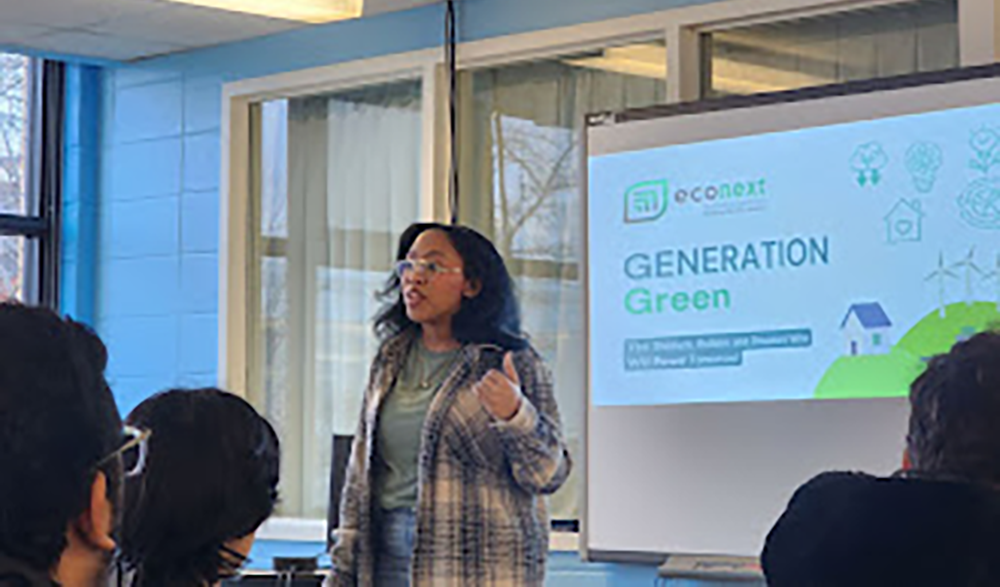
econext’s Workforce Events Lead Zakiya Young gives a presentation to a local high school.

The presentation covers a wide range of topics, all tied together by the growing conversation around the green economy in the province. Students learn about the electricity generation options currently used in the region, the types of careers available in the energy sector, and the goals surrounding decarbonization and energy. Hands-on activities are a key component of the program. Students are encouraged to imagine their own cities and towns, considering what energy projects and jobs would be needed to support them.

“The students participate in activities that have them thinking critically about the future,” said Young. “One day, they will be the ones at the helm, and it’s exciting to see them engage, brainstorm, and debate after learning about some of the developments happening here.”

econext will continue to pilot the program through the first half of 2026, with plans to expand to more regions in the coming year. Teachers or school liaisons who are interested in having econext visit their school are encouraged to contact Zakiya at zakiya@econext.ca for more information.

econext marks first year of Project Zero Incubator Program as entrepreneurs pitch circular solutions

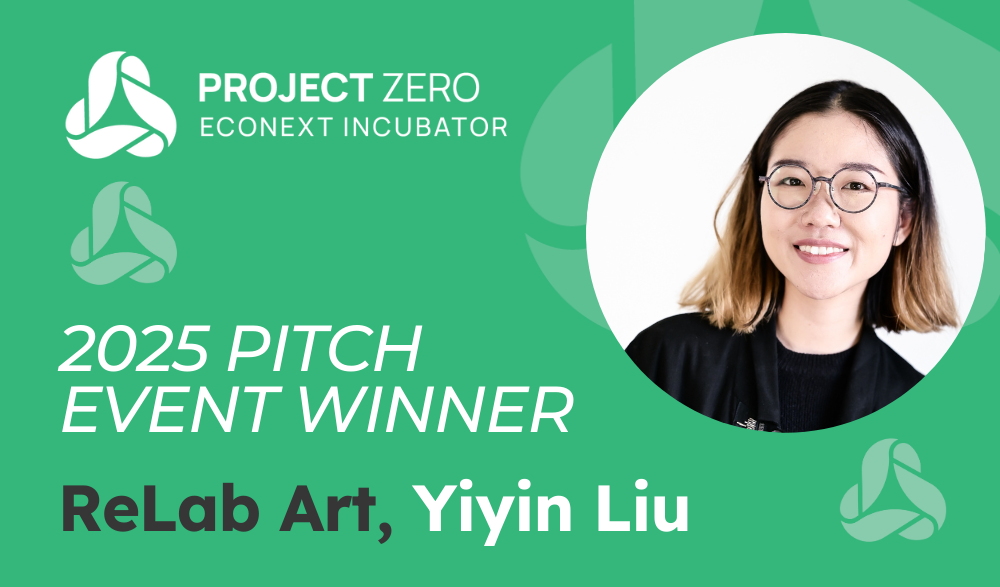
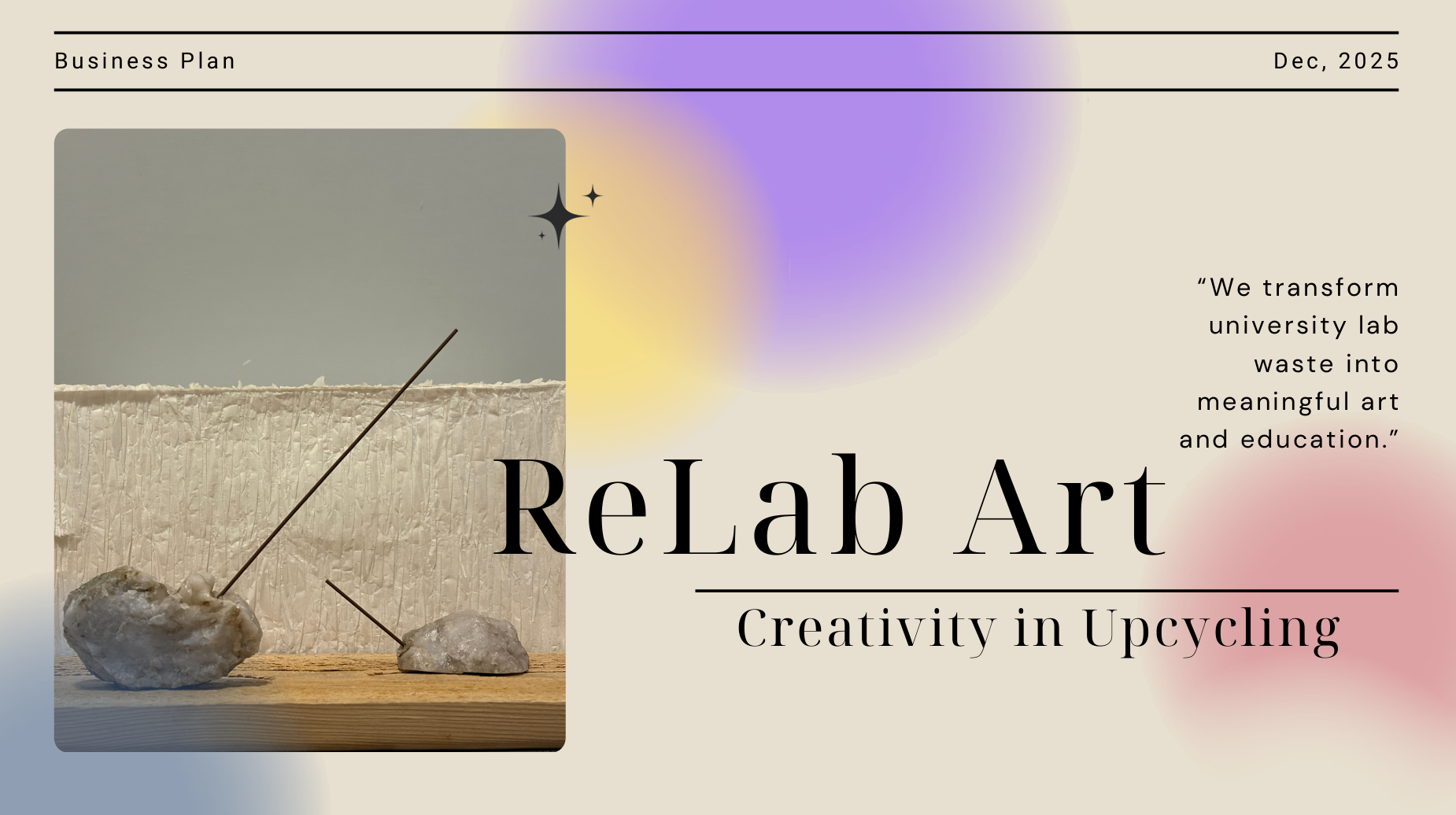
St. John’s, NL — Entrepreneurs from across Newfoundland and Labrador capped off the first year of econext’s Project Zero Circular Economy Incubator last week by pitching their ventures to a panel of industry experts. ReLab Art, founded by Yiyin Liu, took home the top prize of $3,000 for its innovative approach to repurposing physical waste from MUN laboratories into unique artwork. All other incubator participants received a $500 program contribution bonus to help support their ventures.

Program lead Audrey Parnell, Manager of Circular Economy with econext, said the inaugural year demonstrated the strength of the province’s growing circular-economy sector. “I loved the energy and diverse projects we saw from our inaugural cohort of ventures. While the circular economy is just starting in Newfoundland and Labrador, these ventures showcased the immense potential that exists in the province.”

Six Months of Work Culminate in Public Pitch Event

(Presentation by Yiyin Liu, highlighting their venture ReLab Art and showcasing some of their recycled art.).

The pitch event marked the end of a six-month incubator offering business training, circular-economy guidance, and one-on-one mentorship to help participants develop or refine their ventures. Over program phases, entrepreneurs were introduced to strategies for reducing waste, improving resource efficiency, and extending the lifespan of materials through reuse, repair, redistribution, and recycling.

Ventures explored a wide range of ideas, from oil-filtration recycling to 3D-printed farming kits. “I have been impressed with the creativity of our entrepreneurs who are able to find value in waste,” said Parnell. “There was a wide spread of ideas, which represents the range of opportunity available in our province.”

Judges from across the industry evaluated the final presentations, while community members, partners, and other representatives attended to learn about emerging companies working to shift the province toward more sustainable economic practices.

Promoting Circular Innovation

The incubator was launched to help businesses move away from the traditional “take-make-waste” model, in which products are used briefly and then discarded. Globally, only 7.2% of materials are recirculated at the end of their life, a trend that fuels resource depletion and strains natural systems.

Circular-economy approaches aim to reverse this pattern by keeping products and materials in use longer and designing systems that minimize waste. The econext Project Zero Circular Economy Incubator provides Newfoundland and Labrador entrepreneurs with the tools and expertise to grow and implement such models locally.

Acknowledging the Contributors

econext extends its thanks to everyone who contributed to the success of the pilot cohort, including the pitch judges, program participants, attending audience, subject matter experts, and program mentors.

Special appreciation is given to the team at the Synergy Foundation for their help in launching the Project Zero Incubator within Newfoundland and Labrador, as well as to the Multi-Materials Stewardship Board for their role in supporting this program.

A complete list of participating ventures is available here: here

Next Steps 

With its first year complete, econext is preparing for the next cohort. “We’re excited to move into our second year of the incubator program, building on what we’ve learned and strengthening the support we offer to entrepreneurs across the province,” said Parnell. “It’s been inspiring to see new ideas emerge around waste and circularity, and we’re looking forward to helping our 2026 cohort continue to develop and mature their businesses.”

Applications for the 2026 Project Zero Circular Economy Incubator will open in the coming year. Updates will be shared through econext’s weekly newsletter, and inquiries can be directed to incubator@econext.ca.

CEO Message – August 6, 2025

Dear econext community,

During my first few days serving as your CEO, I’d like to thank the econext board and team for placing your trust in me to carry the baton from Kieran’s accomplished hands.

To our members: Thank you for your work, every day, minimizing environmental impact, maximizing economic prosperity, and developing our green economy. Newfoundland and Labrador has the natural resources, the skilled workers, and the political will to make great things happen here. econext is here to support you in your important work.

We’re seeing a sharper focus at the provincial and national levels on climate action, advancing Indigenous peoples, and progressing environmentally sustainable economic development. This presents a unique opportunity for econext to carve out a niche and deliver meaningful value to our members and stakeholders like never before

Over the coming weeks and months, I will be focused on gathering your input for a new strategic plan which will help us differentiate our organization, create value for members and partners, and help us achieve organizational sustainability into the future. I very much look forward to your input.

Thank you,

Laura

CEO Message – Newfoundland and Labrador’s emerging clean energy industry becoming recognized far and wide

This Spring I had the fortune and honour of traveling far and wide on behalf of econext, representing the the interests of the association’s members and (hopefully!) those of Newfoundland and Labrador.

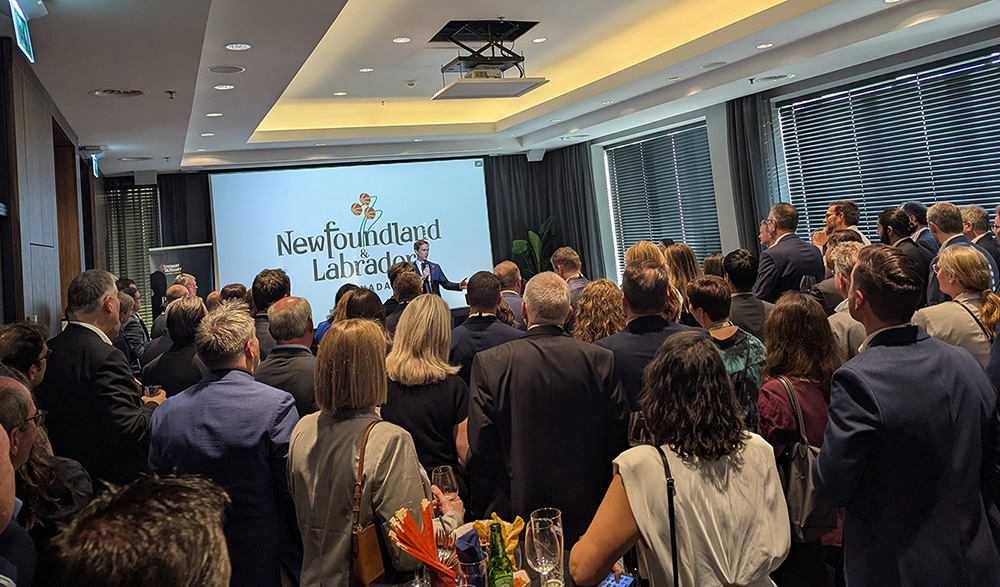
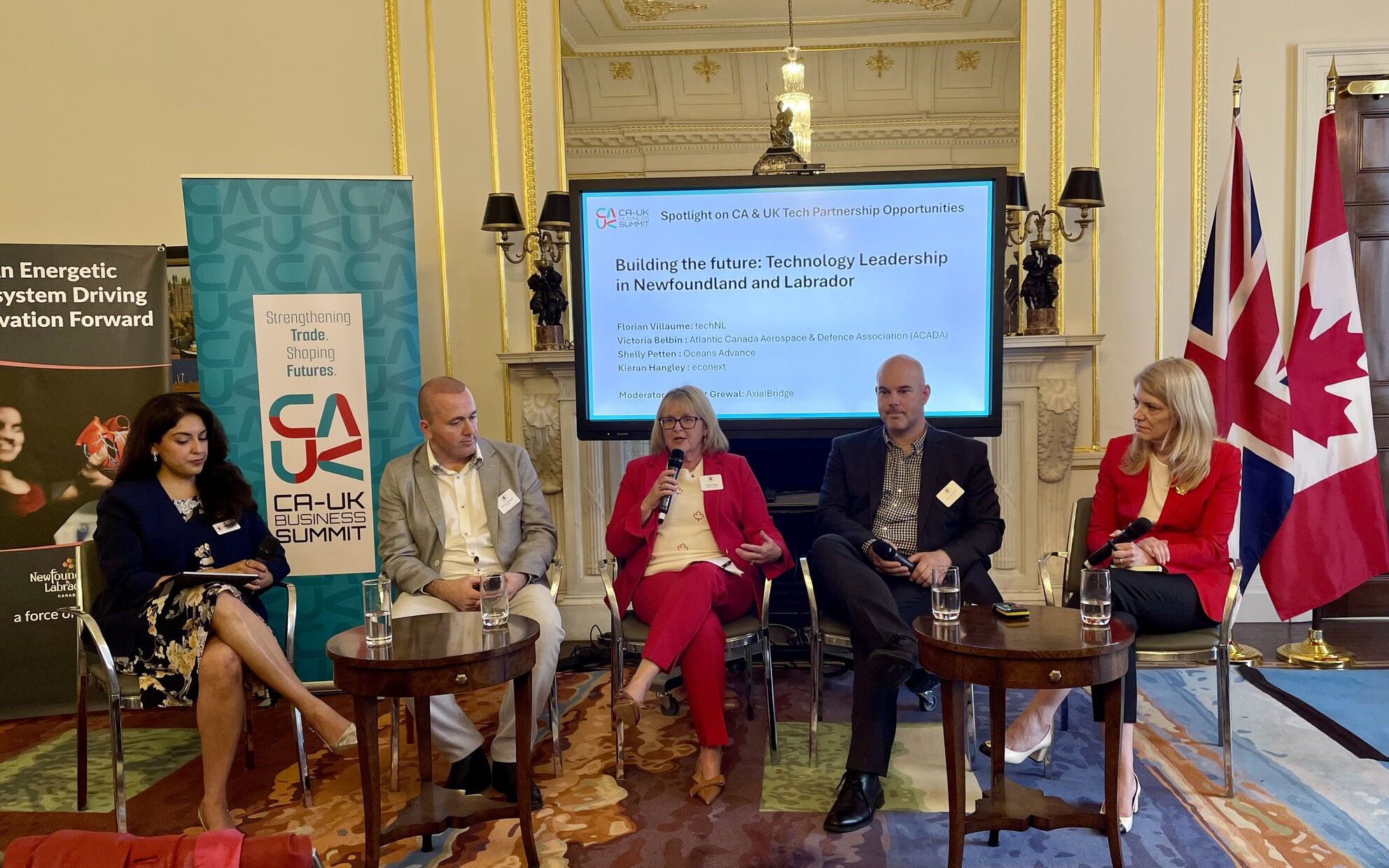
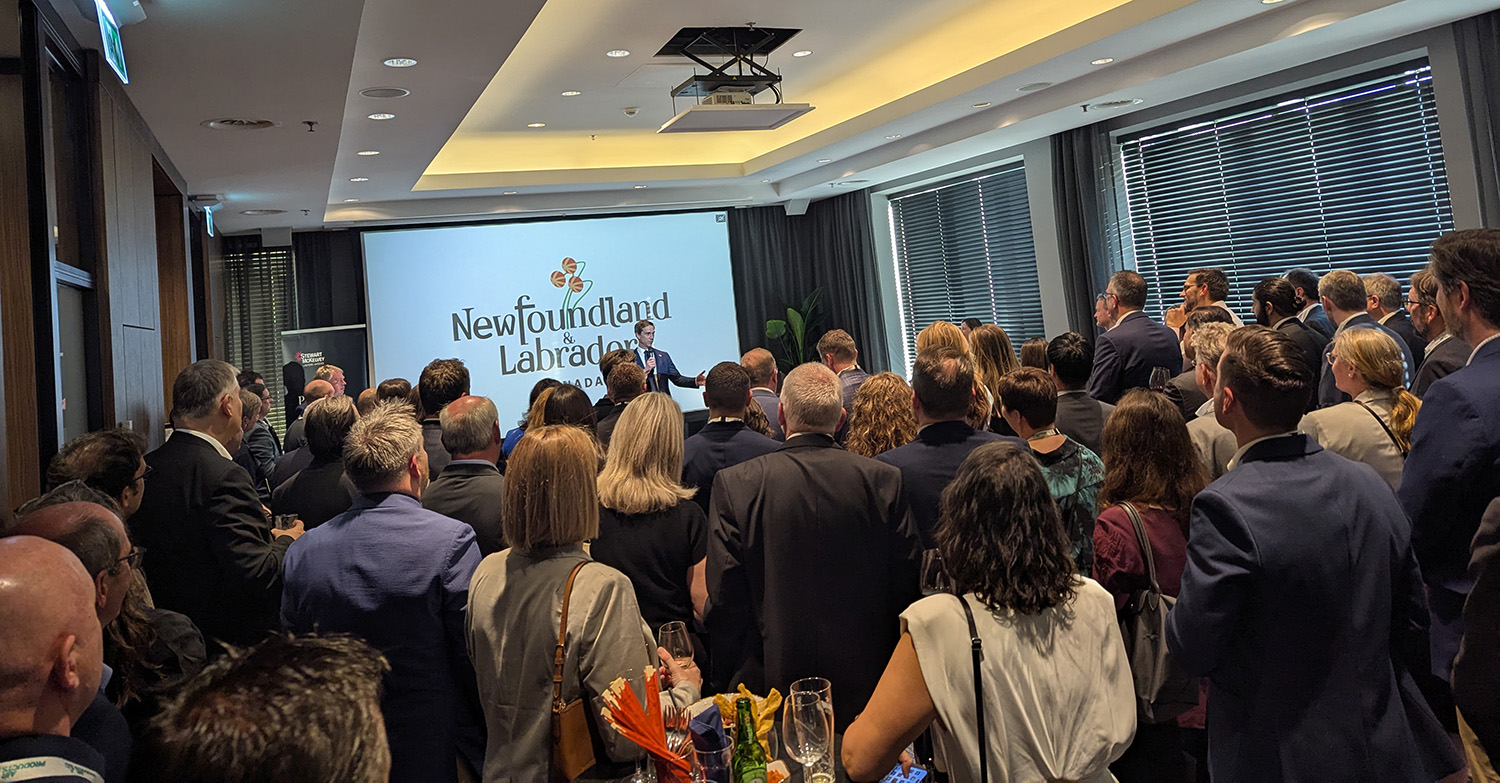
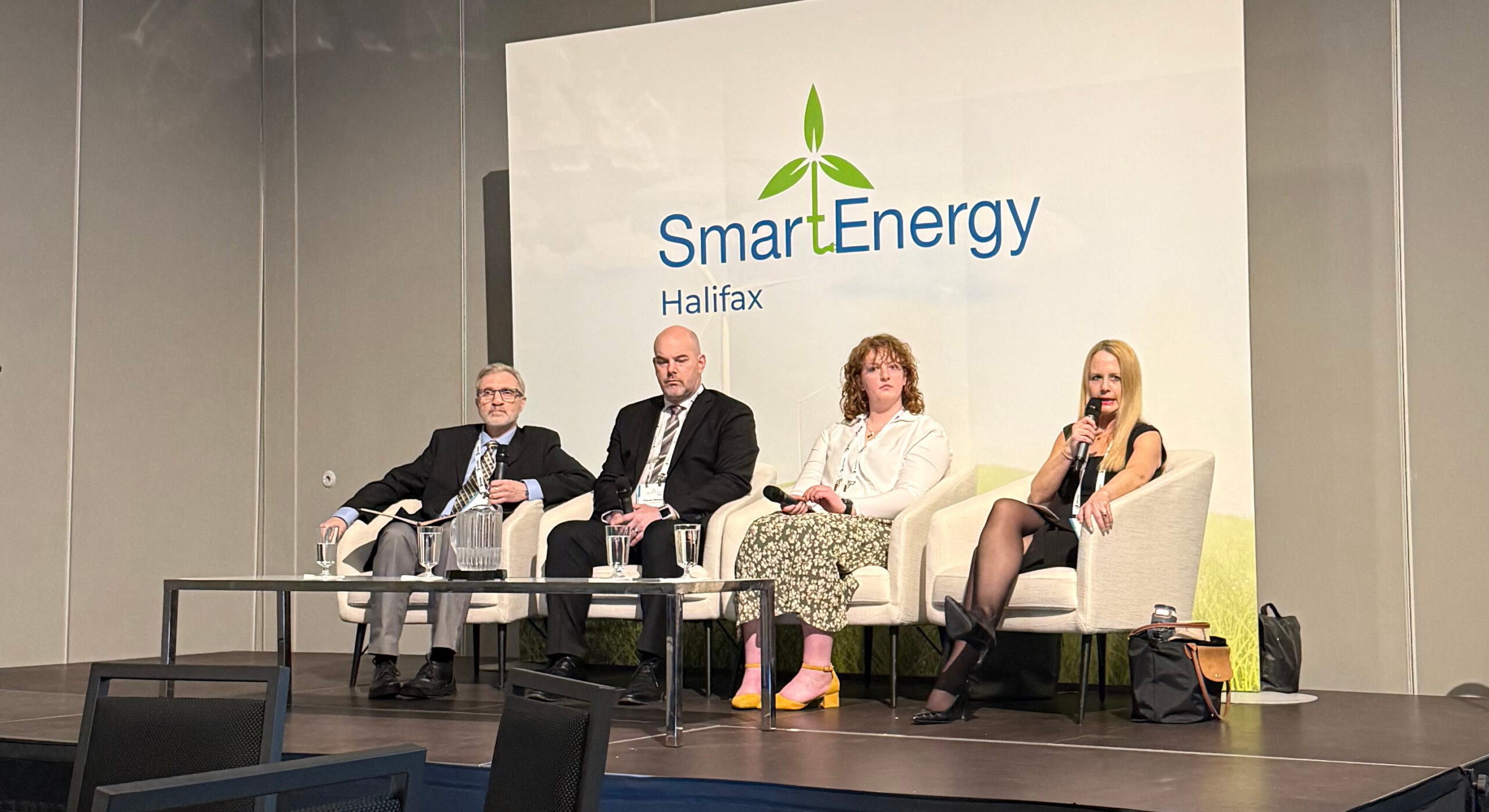
In April I had the chance to speak on panels at both the Hydrogen East and SmartEnergy conferences in Halifax. Then it was Edmonton later in the month for the Canadian Hydrogen Convention. In May I was in Rotterdam for the World Hydrogen Summit, and last week I spoke on a panel at the Canada-UK Business Summit in London.

At the Canada-UK Business Summit sharing the stage with Moderator Jaspreet Grewal, Florian Villaumé (Tech NL), Shelly Petten (Oceans Advance), and Victoria Belbin (Atlantic Canada Aerospace and Defence Association).

From Western Canada to continental Europe, our province is becoming recognized for its major clean energy developments – namely the six wind-to-hydrogen projects being pursued and the NL-Quebec MOU to develop/augment the Upper Churchill hydro resources. Whether it’s wind or water (or a combination of both), these projects are at scales which put Newfoundland and Labrador at the forefront of the global energy transition. Plus: critical minerals!

Through these past couple of months, there were a couple of things I have taken away that I think are worth sharing.

Newfoundland and Labrador’s export-oriented clean energy industry is not the norm in Canada

First, within the Canadian context, our province is fairly unique in that much of the clean energy development being pursued is for export. The Canadian conversation at large is focused on the adoption of clean energy and clean fuels, whereas the opportunity in Newfoundland and Labrador is predominantly production for trade purposes*.

Premier John Hogan at the World Hydrogen Summit in Rotterdam. An impressive showing given he was sworn in only ~10 days prior!

Given that the nature of the projects we are seeing in NL are different from elsewhere in Canada, we have to be deliberate and determined in advocating for this industry nationally – because nobody else can or will. A good analogy for this would be our oil and gas industry. Sure, there’s oil and gas production elsewhere in Canada… but nobody else does it offshore. Our clean energy industry is evolving differently as well, and will need bespoke supports to make it thrive. We need to be loud about this.

Uncertainty in Newfoundland and Labrador is outweighed by unshakeable confidence in Europe

The advancement of wind-to-hydrogen projects in our province have not taken place at the speed which many were predicting some years ago. This has bred some uncertainty within the province about the whole enterprise.

But when in Europe, the adoption of hydrogen technologies is a foregone conclusion. It is not a debate. In fact, some jurisdictions are doubling down on previous commitments. Europe wants green hydrogen and – learning lessons from relying too much on one source (Russia) for energy in the past – wants a diverse array of suppliers. They are counting on Canada to be one of those suppliers, and that means Newfoundland and Labrador.

Mark Hunter (GovNL), myself, Jenna Broders (North Atlantic), and Susan Wilkins. Let’s hope econext‘s next CEO takes a better picture than I do.

There is infrastructure that needs to be built and pricing challenges that need to be addressed. With time and hard work, these hurdles will be overcome.

When you’re in the middle of something that is brand new, progress feels like it takes an eternity. In retrospect, much has been achieved in just a few short years. Yes, a lot of work still needs to be done. But the fundamentals remain: Europe wants clean energy and Newfoundland and Labrador not only has lots of it but has a whole host of other competitive advantages to boot.

Let’s face it: if a Newfoundlander was told in 1975 that one day soon the province would be producing oil over 300km offshore – and then shipping it halfway around the world – I suspect they would have some doubts.

An important year ahead

In the next year we are expecting to see developers advance through environmental assessment and permitting processes. We are expecting to see the NL-Quebec MOU take shape into an agreement. We are expecting concrete (and much needed) advancement for our domestic electricity grid.

Unexpected things will happen. There will be ups and downs along the way, but the underlying conditions continue to position our province favourably.

I suppose the big lesson for me through these recent travels is that the more I am exposed to the exciting things happening throughout Canada and around the world – the more I realize that what is taking place in Newfoundland and Labrador is very special. We are on the cusp of big things here in this province, and it’s important we keep our eye on the ball.

Don’t be shy about Newfoundland and Labrador’s clean energy future. We need the nation and the world to know!

// Kieran

* A couple of caveats with this comment so I don’t get myself in too much trouble. Just to be clear, the economic driver is export. But clean fuels use domestically is still very important for the decarbonization of our economy and Newfoundland and Labrador’s achievement of net zero by 2050. And from an electricity perspective, I definitely don’t want to suggest that we don’t need a lot more electricity for domestic use.

econext 2024-25 Annual Report now available!

econext is pleased to announce the publication of its 2024-25 Annual Report.

It is been an incredibly productive year for the association. We hope that you take some time to read about all that the Board and Staff of econext have accomplished through 2024-25.

As always, your feedback on our work is always welcome. Do not hesitate to contact our staff with any questions or comments that you have.

Read the Report