
International Women’s Day 2026

Celebrating Women Driving the Green Economy

March 8 marks International Women’s Day, a global celebration of the achievements of women and a reminder of the importance of advancing equity across all sectors. From science and policy, to entrepreneurship and community leadership, women have played a vital role in shaping the world we live in today.

In the green economy, women are helping lead the transition toward a more sustainable future. Across industries and communities, women are advancing environmental, social, and governance (ESG) initiatives, developing innovative climate solutions, and championing sustainable practices that support both people and the planet. Research continues to show that organizations with greater gender diversity are more innovative and better equipped to address complex challenges. Inclusive leadership is therefore an important part of building a resilient green economy.

At econext, we see this impact firsthand. Women play a major role in shaping econext’s work, representing nearly half of our Board and the majority of our leadership team and staff. Their leadership, expertise, and perspectives help guide our programs, partnerships, and initiatives across the province. We are committed to continuing to build the green economy as a diverse, inclusive, and accessible sector that benefits from a wide range of experiences, ideas, and perspectives.

This International Women’s Day, we celebrate the women who are helping lead the transition to a greener economy, both within our organization and across our network.

Stories from Women in the Green Economy

Below, you can read stories from some of the women helping shape the green economy. Their experiences highlight the many pathways into sustainability careers and the important role women continue to play in driving innovation, collaboration, and climate action.


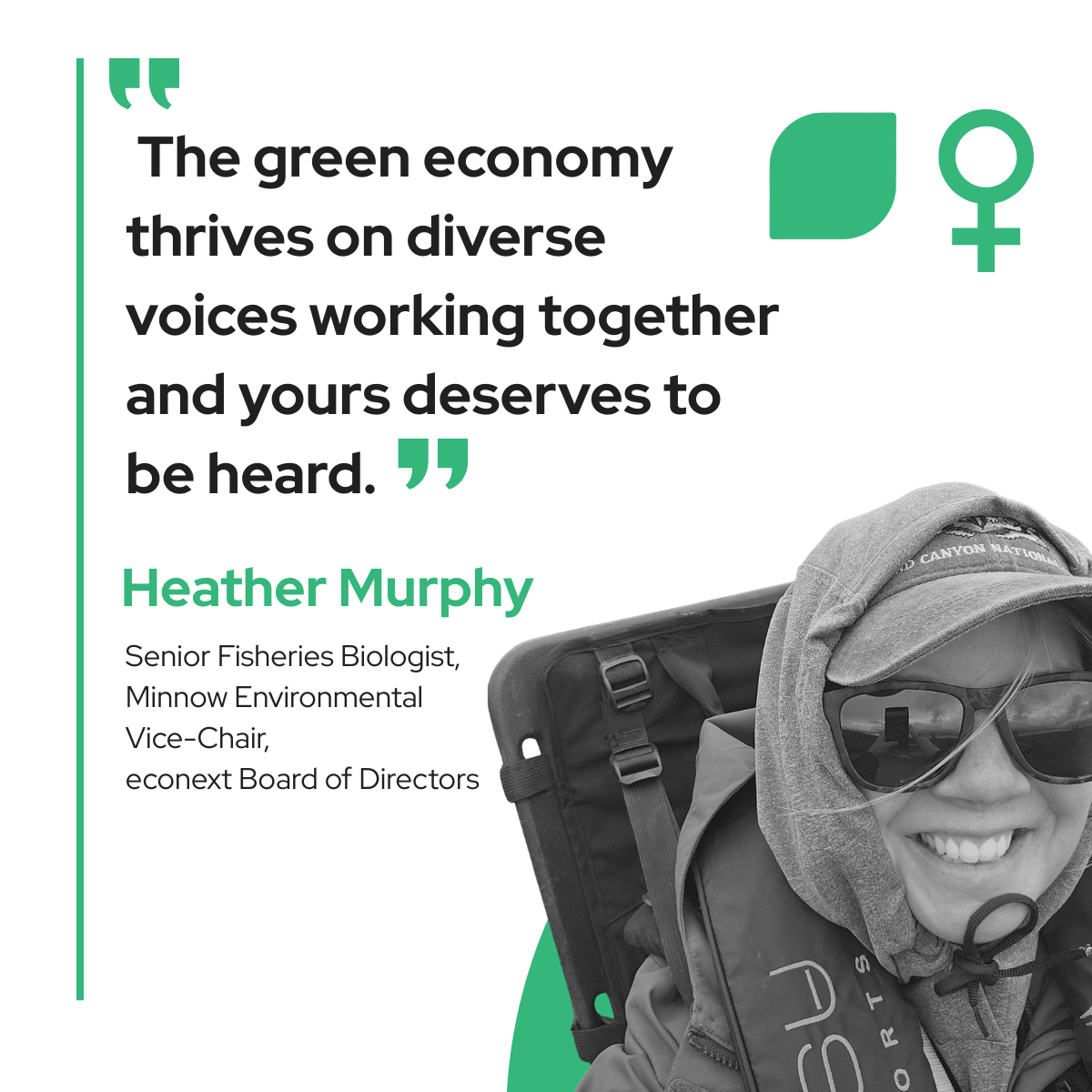
Heather Murphy, Senior Fisheries Biologist, Minnow Environmental & econext Board of Directors Vice-Chair
 

Can you share how your journey led you to working within the green economy?

My interest in the green economy started long before I entered the workforce. I was fortunate to have professors who encouraged curiosity and exploration early in my academic journey. They saw potential in the questions I asked, and their enthusiasm helped shape my understanding of how science can be used to protect ecosystems and support sustainable economies.

Another part of my journey was learning to say “yes” whenever I was invited to the table. Whether it was a research opportunity, conferences, field project, or a conversation with people working in areas I wanted to understand better. Each “yes” opened doors, strengthened my skills, and connected me with mentors and colleagues who showed me how science and sustainability intersect in practical, meaningful ways.

Those experiences naturally led me toward fisheries biology and environmental stewardship, where every decision has both ecological and economic consequences. Working in the green economy became a way to align my curiosity, my values, and my desire to contribute to solutions that support both the environment and the economy.

Have you faced any barriers in your career? If so, how did you overcome them?

I’ve certainly faced barriers, and one of the most important lessons I learned early on was to be honest about my abilities. Instead of pretending to know everything, I made it a habit to ask questions, seek guidance, and invite feedback from my teammates, mentors and senior leaders whose perspective I respect and appreciate.

Being transparent about what I didn’t yet know didn’t hold me back though. It helped me learn and advance faster in my career. It also built trust within my teams, because people knew I was committed to doing the work well and not just appearing confident. And now, 16 years into my career, I still take this same approach. The learning is never done. Every challenge, conversation, and project adds something new, and staying curious and communicative has been one of the most reliable ways to move past obstacles and continue growing.

Another key lesson was realizing that no one overcomes barriers alone. The best progress happens when you lean on a team. Barriers are overcome when you collaborate, share knowledge, and support each other through the challenges. Recognizing that helped me navigate tough situations with more resilience and far less hesitation.

What message do you think is important for young women entering the green economy?

One of the most important things young women should know is that your voice is a powerful tool! Communication is foundational in the green economy. Whether you’re sharing scientific findings, collaborating across disciplines, or engaging with communities, the ability to communicate clearly and confidently will amplify your impact.

Say yes to opportunities to speak up, ask questions, and contribute to discussions. Even when you feel uncertain, your perspective brings value, and the only way to grow those communication muscles is through practice.

Remember that you don’t have to know everything at the start. What matters is staying curious, being willing to learn, and showing openness in your conversations with mentors, peers, and partners. And just as importantly, understand that progress in this field rarely happens alone. Strong communication within a team, being transparent, listening actively, and sharing knowledge helps turn challenges into collaborative solutions. The green economy thrives on diverse voices working together and yours deserves to be heard.


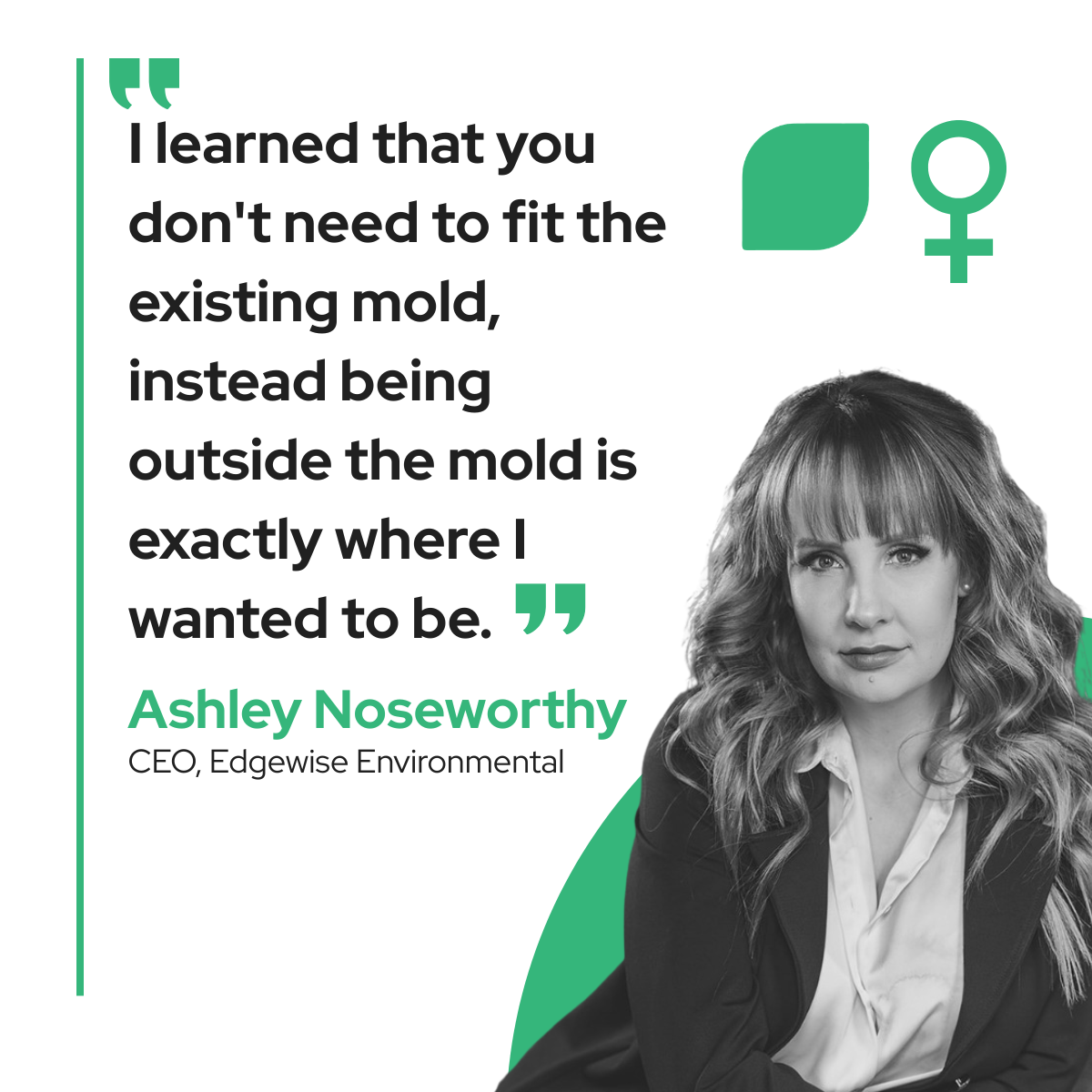
Ashley Noseworthy, CEO Edgewise Environmental
 

Have you faced any barriers in your career? If so, how did you overcome them?

The marine and industrial sectors and even entrepreneurship have historically been male-dominated, and as a female scientist, founder and CEO, I’ve certainly navigated my share of “only woman in the room” scenarios. Early on, the biggest barrier was often credibility. Whether it was securing investment or leading technical training, there was an unspoken pressure to prove I was twice as capable just to be seen as equal.

I overcame these hurdles by focusing on unapologetic competence and community. I leaned into my expertise, let the results of Edgewise speak for themselves, and sought out mentors, who valued innovation over tradition. I learned that you don’t need to fit the existing mold, instead being outside the mold is exactly where I wanted to be.

What message do you think is important for young women entering the green economy?

To the young women considering a profession in the green economy: don’t wait for an invitation. This sector is being built right now, which means there is a unique opportunity to design the rules of the game. We need your perspective, your problem-solving skills, and your leadership to solve the climate crisis. The “green economy” isn’t just one thing, it’s engineering, policy, biology, marketing, economics, and entrepreneurship (and so much more). Find the intersection of what you love and what the planet needs, and go after it with everything you’ve got.


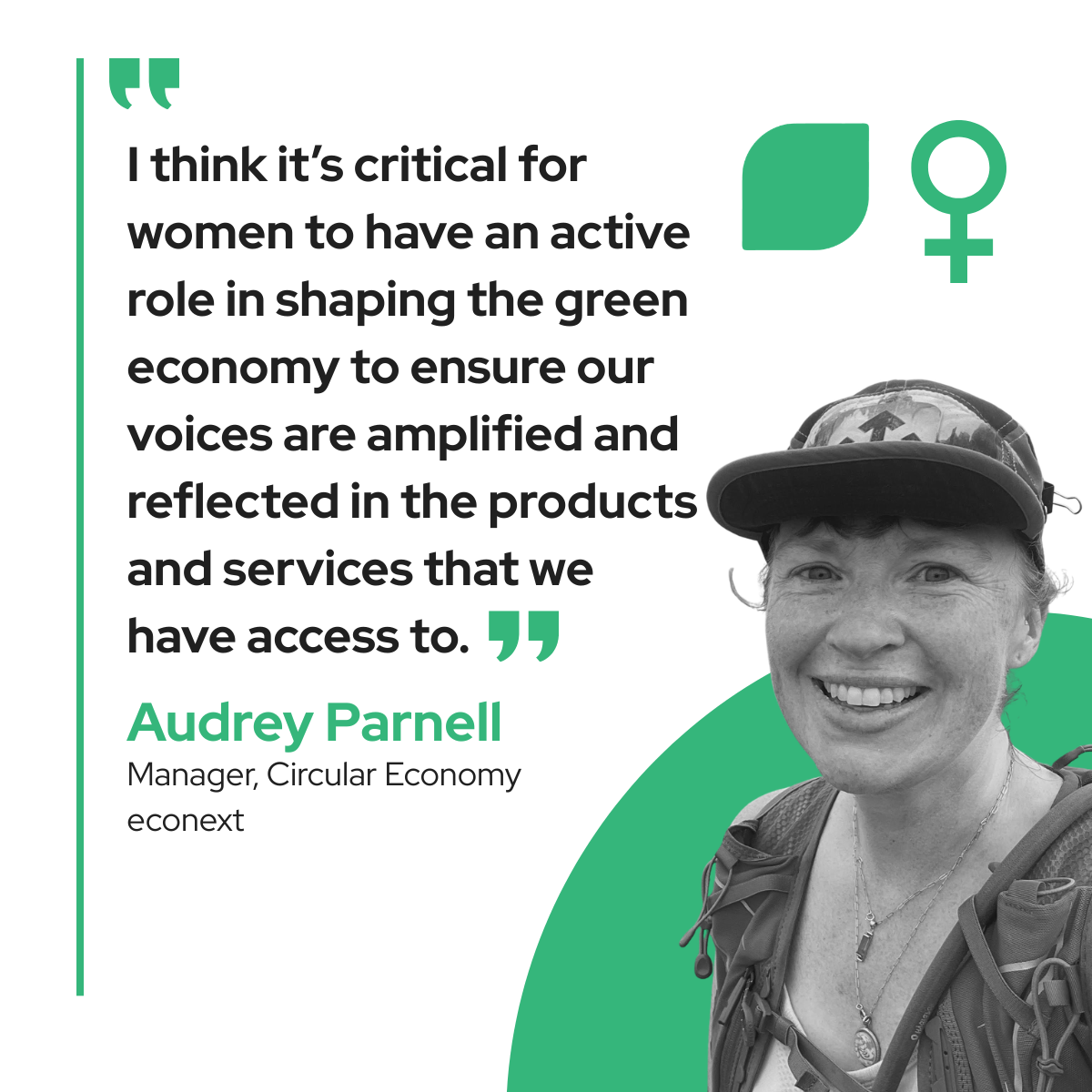
Audrey Parnell, Manager, Circular Economy, econext
 

Can you share how your journey led you to working within the green economy?

I have always loved the outdoors since I was a child which led me to my BS and MS degrees in Geology – I can get a degree in hiking?! With geology I was able to go from working in Oil&Gas, to climate consulting, and now work at econext in exploring the opportunities to find value in waste. Being a part of the world and thinking about the planet has always been a core part of my life and I am excited to be at this inflection point where we can transform industry towards sustainability.

What message do you think is important for young women entering the green economy?

I think it’s critical for women to have an active role in shaping the green economy to ensure our voices are amplified and reflected in the products and services that we have access to. Women are central to shaping a low emission future through working as engineers to find clean power to as designers developing reusable products.


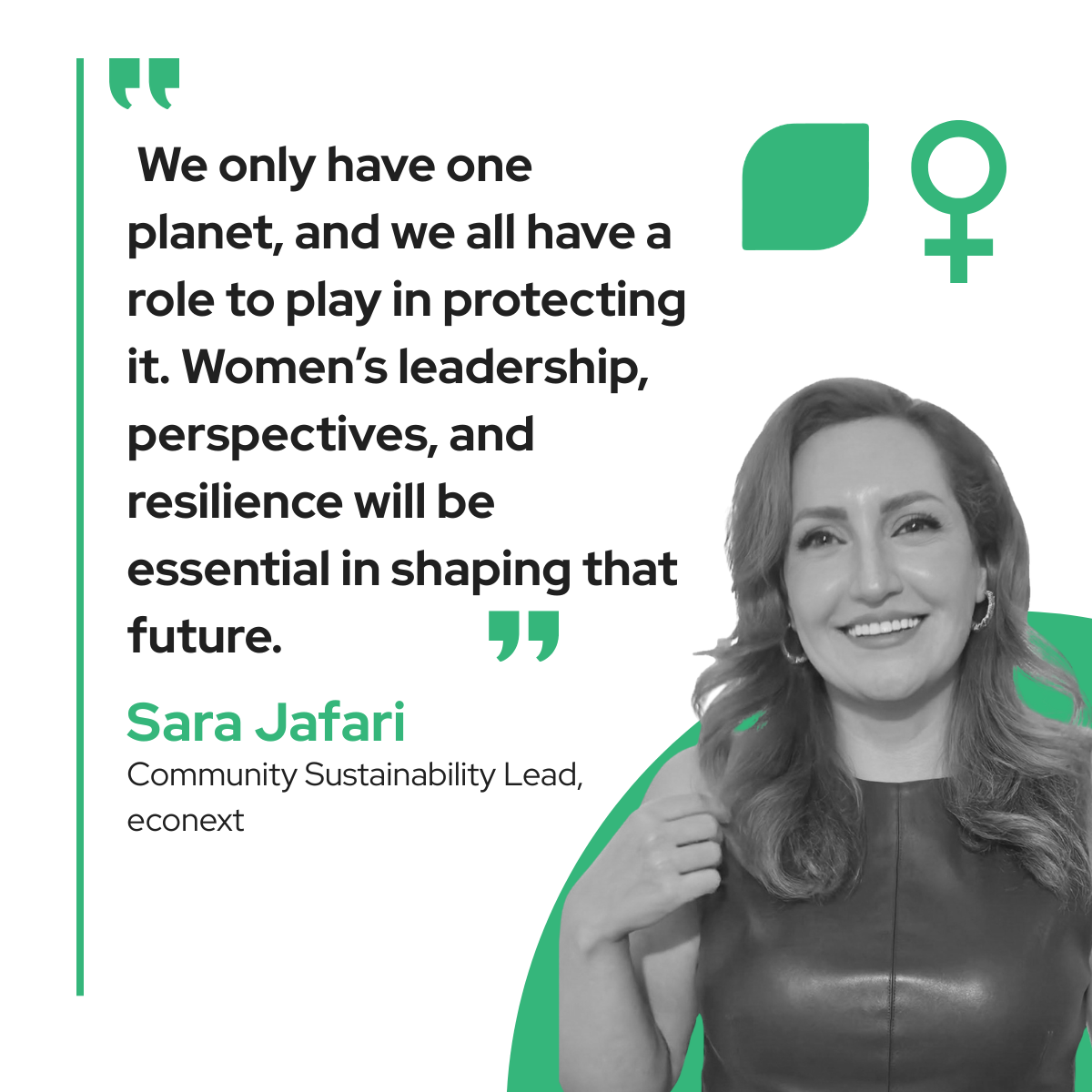
Sara Jafari, Community Sustainability Lead, econext
 

Can you share how your journey led you to working within the green economy?

My journey into the green economy began with my background in geomorphology and climate studies, followed by a master’s in urban planning, where I focused on the environmental aspects of sustainable urban growth and development. Earlier in my career, I worked in the cleantech and renewable energy sector, which strengthened my interest in sustainable solutions and project management. After moving to Canada and studying MBA at MUN, I had to rebuild my career from scratch. Working with econext allowed me to reconnect my planning and environmental background with climate action, particularly through initiatives like the Net-Zero Communities Accelerator, where I collaborate with NL municipalities and industry partners to support more sustainable and resilient communities.

Have you faced any barriers in your career? If so, how did you overcome them?

As an immigrant woman building a career in Newfoundland and Labrador, one of the biggest challenges was rebuilding my professional network and establishing credibility in a new environment where my previous experience was not always immediately recognized. In smaller communities, professional networks can be tight-knit, which can make career development more challenging for newcomers. I overcame these barriers by continuing to strengthen my expertise, building meaningful professional connections, actively contributing to my projects, and staying focused on the impact I wanted to create. At the same time, I was fortunate to receive support and encouragement from generous colleagues and community members along the way. That support made a real difference, and today I try to pay it forward by supporting and mentoring others whenever I can.

What message do you think is important for young women entering the green economy?

The transition to a sustainable and low-carbon economy requires purpose-driven and solution-oriented people. My message to women entering the green economy is to approach this work with a problem-solving mindset and a strong sense of purpose. Climate action is complex, long-term, and often challenging because the required changes are systemic. But the goal is clear: protecting our environment while building stronger, more sustainable economies and communities. This work can feel like an endless journey, but we do it because we have a responsibility to future generations. We only have one planet, and we all have a role to play in protecting it. Women’s leadership, perspectives, and resilience will be essential in shaping that future.


Ashley Smith, Owner, Fundamental Inc.
 

Can you share how your journey led you to working within the green economy?

I’ve always been interested in ‘environmental’ things, it’s been clear to me since my late teens that we need to do a better job of interacting with nutrient and energy cycles of the planet. I got a Bachelor’s degree in population genetics with a minor in chemistry, that led me to work in the area of ‘environmental science’ generally, which led me to become the sustainability coordinator for an urban planning and architecture firm, which led me to LEED and energy efficiency, then I got a Master’s degree in civil and municipal engineering, which led me to construction. I started my own firm when I was pregnant with my first child. I wanted to be the change I wanted to see with respect to action on climate change. And now I’ve been succesffully running Fundamental Inc for 10 years, with each year growing to new clients and new exciting projects. I’m very proud of our B Corporation Status, of the $33Mil in funding we’ve brought to the province for our clients, and that we’ve decoupled our GHG emissions from Fundamental’s economic growth – our 2024 emissions were 32% lower than our 2019 emissions despite our annual revenue being 2.5 times higher. (2025 stats will be ready soon!)

Have you faced any barriers in your career? If so, how did you overcome them?

There are always barriers. A struggle is hard to deal with at the time – but it does build character; and I have learned more, and faster, from my ‘failures’ than I have from the majority of the ‘good times’. Most of what I would call success in life has been finding ways to deal constructively with adversity. I am not a confrontational person – in fact, I will go seventeen ways from Sunday to avoid open conflict whenever possible – but, when push comes to shove, I will stand firm and hold my ground with respect and kindess (or solid preparation, evidence, and determination – as the situation warrants). I’m a firm believer that what you get out of life is directly proportional to what you put into it. In my experience owning and running a business – you have to see the hard work as a given, be primarily motivated by something deeper than accolades and money, and hope that you get a few lucky breaks. I am a profoundly pragmatic person – when you know something isn’t right, it isn’t – acknowedge it (freak out in a safe place if you need to), get over it (breathe – this too shall pass), and move towards what works (stopping every now and again to hug your family and smell the roses).

What message do you think is important for young women entering the green economy?
I would say this is true for all disciplines and industries, and all humans in general really – care enough about the thing you’re doing to do the work needed to get good at it. Short cuts are trouble. Take responsiblity for your actions and what you bring to the table. Lean into helping others around you – especially in NL where the market is small enough that relationships really matter. Abandon ‘protectionist’ notions and remember that a rising tide really does lift all ships. I tell my kids all the time – teamwork really does make the dream work.
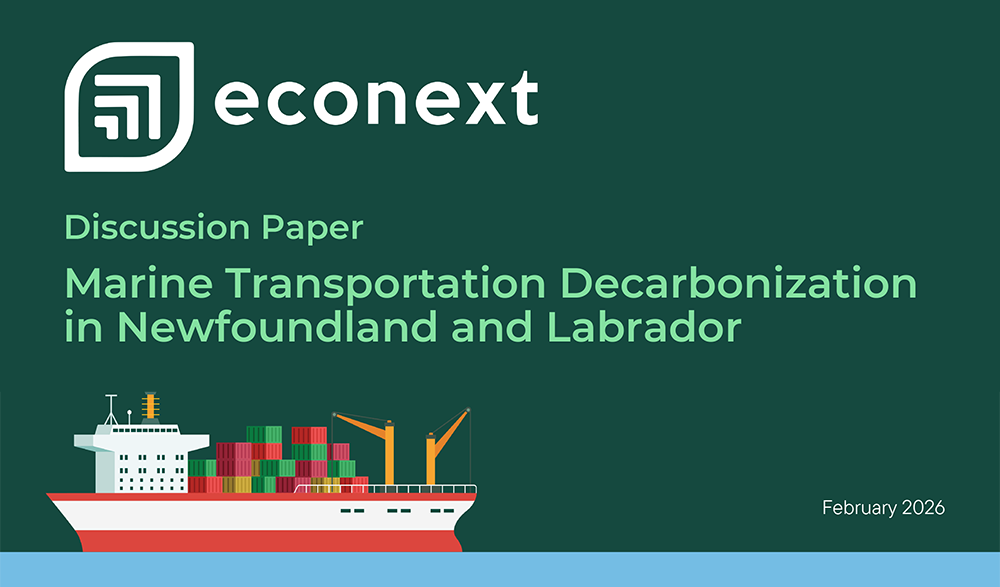
Discussion Paper: Marine Transportation Decarbonization in Newfoundland and Labrador

Marine transportation accounts for 8% of greenhouse gas (GHG) emissions in Newfoundland and Labrador (NL). The sector is not well understood in NL from a GHG perspective while, at the same time, research has shown that the marine transportation sector has the greatest potential for low-carbon fuel adoption within the province. These factors led to econext prioritizing the advancement of marine transportation decarbonization planning and activities within the province.

There are environmental and economic benefits to be achieved in NL through the decarbonization of marine transportation. This discussion paper contains new analysis of data that has only recently become available; econext hopes that this effort helps advance net zero planning and activities in NL’s marine transportation sector.

Download the Report

Download One-Pager

Modernizing Regulatory Engagement to Support Innovation in the Electricity Sector

Both the push to decarbonize the economy through fuel-switching and increasing clean energy demands are putting significant stress on the systems that regulate electricity grids.

Regulatory frameworks and processes around the world are being challenged by this transformation, as they were not designed to manage the speed and breadth of projects being put before them. Globally, efforts are underway to implement regulatory innovations that will address key barriers.

In this report, Dunsky Energy + Climate Advisors present their findings on emerging program examples from across North America that can help inform innovative approaches to regulatory processes in the electricity sector – programs that are helping governments, utilities, regulators, developers, and technology providers collaborate more closely to meet the moment.

Download the Report

View the Webinar

CEO Message – February 11, 2026

Over the past few months, our team has been gathering your input for a new strategic plan which will help us differentiate our organization, create value for members and partners, and help us achieve organizational sustainability into the future.

Thank you for your participation in our survey, focus groups and interviews. Your feedback and insights are helping shape our way forward.

Based on your input, we are currently drafting a new strategic plan and will share this plan with you in early April. For now, I’d like to share an update on what we’ve heard from you, our valued members and partners.

Your feedback has indicated that econext should prioritize: market and opportunity development; advocacy and government relations; enhanced communication, engagement and reporting; and developing a sustainable organization. Nine key areas were highlighted during our engagement process, and they are as follows:

1) Strategic focus: Do fewer things more deliberately

  • Members consistently expressed high trust and satisfaction with econext, but also expressed concern that the organization appears to be trying to do too much.
  • Strategically, econext should:
    • Clearly articulate its core role at the intersection of economic development, environmental performance, workforce development, and policy
    • Prioritize initiatives that deliver tangible, member-facing outcomes
    • Be disciplined about saying no to work that falls outside of our strategic sweet spot
  • Strategic clarity will help manage expectations, reinforce value, and strengthen differentiation in an increasingly crowded ecosystem.

2) Advocacy as a core strategic function (with visibility)

  • While advocacy activity is occurring, members report not seeing or understanding it.
  • Strategically, econext should:
    • Formalize its advocacy and policy coordination role (e.g., consider elevating advocacy and coordination as a core and visible pillar of our strategy)
    • Convene sector, or issue-specific working groups to align positions
    • Communicate advocacy goals, actions, and outcomes clearly and consistently
  • Success in this area depends not only on advocacy activity, but on making that activity visible and credible to members.

3) Networking and convening 

  • Networking and convening are econext’s strongest and most consistently valued assets.
  • Strategically, econext should:
    • Move toward more intentional and curated networking
    • Increase B2B-focused events with clear business development outcomes
    • Use convening as a tool for coordination, business development and problem-solving
  • Events and convening should increasingly support action and alignment, not just information sharing.

4) Practical value over symbolic leadership

  • Members place the highest value on econext when the organization delivers tangible, action-oriented outcomes.
  • Strategically, econext should:
    • Ensure projects have clear member and partner value propositions
    • Consider prioritizing services that members would be willing to pay for
  • This orientation can help support long-term organizational sustainability.

5) Workforce development as a strategic growth area

  • Workforce challenges cut across nearly all sectors, including recruitment, retention, and skills alignment. Members already see econext as a trusted workforce partner.
  • Strategically, econext can strengthen this position by:
    • Better coordinating employers, educators and government
    • Focusing on employer-driven training and micro-credentials
    • Embedding inclusion as a strategic advantage, including newcomer and Indigenous participation
  • Clearer communication about workforce initiatives and gaps can reduce duplication and increase perceived impact.

6) Regional inclusion

  • Some members identified a perceived focus on St. John’s and the Northeast Avalon.
  • Strategically, econext should:
    • Design programs with regional delivery in mind
    • Plan targeted engagement in other provincial business centres
    • Use regional engagement to surface new opportunities and markets
    • Regularly communicate about events and programs taking place in other parts of the province
  • Regional inclusion should be focused on opportunity creation, not simply outreach.

7) Broaden the narrative beyond clean energy

  • While clean energy remains central to sustainable economic development in NL, members from other sectors want greater visibility and tailored value.
  • Strategically, econext should:
    • More consistently integrate other sectors
    • Position waste and circular economy initiatives as business efficiency and innovation opportunities
  • This approach would reinforce econext’s positioning as a whole-of-economy organization.

8) Intelligence and sense-making as a value proposition

  • Members rely on econext to help them navigate rapid change and uncertainty.
  • Strategically, econext should:
    • Focus on curating and prioritizing information rather than increasing volume
    • Provide forward-looking insights with 1–3 year outlooks
  • Effective sense-making strengthens engagement without increasing communication fatigue.

9) Intentional member engagement

  • Members would like to see more proactive and structured engagement.
  • Strategically, econext should:
    • Build one-to-one member engagement into its operating model
    • Create clear pathways for members to provide input into priorities
    • Improve engagement of SMEs, rural members, and traditional sectors
  • Proactive engagement supports retention, relevance and advocacy credibility.

If you have any thoughts on this summary, please reach out anytime at laura@econext.ca.

I look forward to sharing our new strategic plan with you in early April.

Thanks again for your input and support.

Laura

Discussion Paper: Sustainable Film and Television Production in Newfoundland and Labrador

A new report led by econext, in partnership with PictureNL and local stakeholders in the film and television community, is laying the groundwork for a more sustainable future for the industry in Newfoundland and Labrador. The environmental scan, the first of its kind in the region, establishes a baseline understanding of the sector’s environmental performance and identifies opportunities for cleaner, more efficient film production practices.

The study was informed by a series of workshops, set visits, and individual consultations with producers, crew members, suppliers, and service providers. Through these conversations, econext developed a report that captures how the local industry operates and where practical improvements can make the most impact.

The report outlines several recommendations designed to help productions and suppliers take incremental, but meaningful, steps toward sustainability. Among the recommendations are the following:

  • Phasing out single-use items in catering and craft services, and diverting organic waste
  • Identifying rental vehicle supplier options to include hybrid and zero-emission vehicles
  • Collaborating with property owners to improve energy efficiency at production sites
  • Exploring partnerships for zero-emissions and low-carbon power generation for production base camps and on-location filming

These actions will help film productions meet the environmental requirements of major funders and distributors and also enhance the province’s ability to attract large-scale projects from international studios such as Netflix, Apple and Disney.

Click to Download the Report

CEO Message – August 6, 2025

Dear econext community,

During my first few days serving as your CEO, I’d like to thank the econext board and team for placing your trust in me to carry the baton from Kieran’s accomplished hands.

To our members: Thank you for your work, every day, minimizing environmental impact, maximizing economic prosperity, and developing our green economy. Newfoundland and Labrador has the natural resources, the skilled workers, and the political will to make great things happen here. econext is here to support you in your important work.

We’re seeing a sharper focus at the provincial and national levels on climate action, advancing Indigenous peoples, and progressing environmentally sustainable economic development. This presents a unique opportunity for econext to carve out a niche and deliver meaningful value to our members and stakeholders like never before

Over the coming weeks and months, I will be focused on gathering your input for a new strategic plan which will help us differentiate our organization, create value for members and partners, and help us achieve organizational sustainability into the future. I very much look forward to your input.

Thank you,

Laura

Discussion Paper: Energy Storage Applications and Potential in Newfoundland and Labrador

Energy storage is viewed internationally as being key in the fight against climate change, as it allows for the stabilization of renewable energy supplies which are oftentimes intermittently available – when the sun does not shine and the wind does not blow.

The objective of this discussion paper is to outline a range of technologies and consider their various possible benefits within the context of Newfoundland and Labrador – including barriers that may exist to their adoption.

Download Discussion Paper

Wildfires in Newfoundland and Labrador: From readiness comes resilience 

June 18, 2025 – econext’s thoughts are with those impacted by wildfires in Central NL and Labrador. Please see the resources below for local information and support.

From Readiness Comes Resilience 

It used to be that when we thought of wildfires, our minds likely shifted to places like Australia, California, or Western Canada. But the idea of wildfires in Newfoundland and Labrador? Historically, it hasn’t been top of mind.

All of that changed in the summer of 2022, when a series of major fires erupted in central Newfoundland, sparked by lightning strikes during a spell of intensely hot and dry weather. These blazes were some of the largest forest fires to ravage the island in its history, ultimately consuming over 228 square kilometers of land.

The fires caused widespread disruption and hardship. Roads and highways, some of which were the only means of connecting and supplying towns, were closed for days. Grocery store shelves were quickly emptied, and in some cases, food and supplies had to be flown in by helicopter. The smoke and poor air quality also prompted officials to declare a state of emergency in the city of Grand Falls-Windsor and several surrounding communities.

The searing images captured of forests, that were now nothing but ash and charred tree trunks, looked like something out of a post-apocalyptic movie- a far cry from the picturesque landscapes Newfoundland and Labrador is known for.

In the years since, wildfires have continued to threaten communities across the province. In July 2024, Labrador was hit by its largest-ever wildfire evacuation as fast-moving fires swept through communities including Labrador City, Wabush, and Churchill Falls, forcing thousands from their homes and severely disrupting daily life. The fires posed a direct threat to critical infrastructure, most notably the Churchill Falls hydroelectric generating station, which supplies electricity to both Labrador and Quebec.

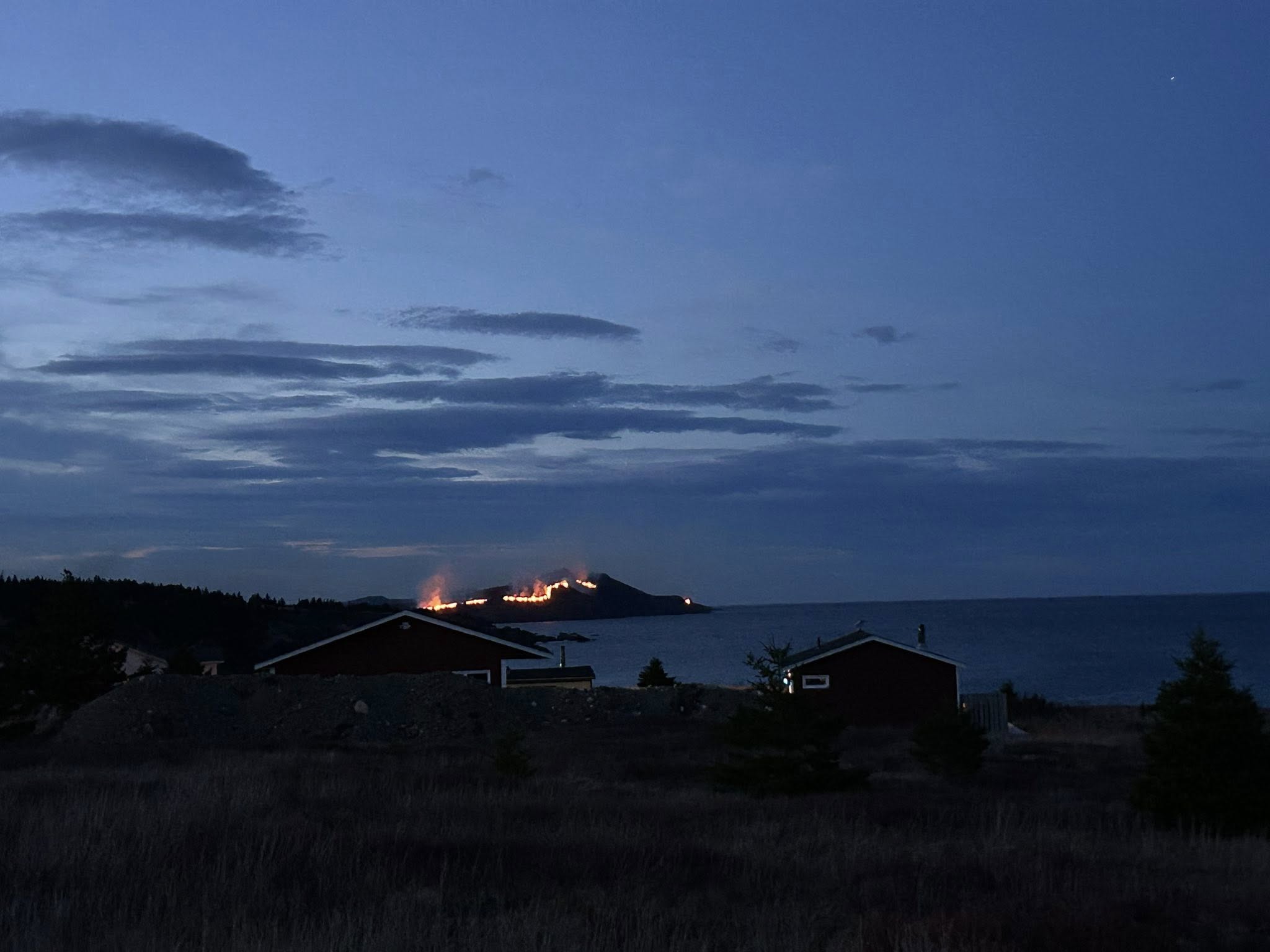
As the wildfire near Churchill Falls crossed the Churchill River, it forced the evacuation of the plant and led to the shutdown of two major transmission lines, resulting in widespread power outages for residents and major iron-ore mines in Labrador West. Emergency power was supplied from Fermont, Quebec, but rotating outages and industrial disruptions persisted, highlighting the region’s vulnerability and the lasting impact on local families, businesses, and essential services.  Then, in 2025, new wildfires broke out in both Adam’s Cove and Labrador, prompting fresh warnings and renewed calls for vigilance as dry conditions and high fire risk persisted.


Why the future looks…smoky

It’s important to note that wildfires are a natural occurrence that play an important role in many ecosystems. They clear dead organic matter from the forest floor and help with nutrient cycling and plant regeneration. However, with global warming and increasing temperatures, the risk of wildfires has increased. Drier conditions and longer fire seasons are the new normal, and it’s not just Newfoundland and Labrador that’s feeling the heat.From the Amazon rainforest to the Australian outback, wildfires are ravaging ecosystems and communities at an alarming rate. Climate change is exacerbating these three major factors that influence wildfires, which when combined pose a significant threat to communities and ecosystems:

1. Dry fuel to burn: As temperatures rise, vegetation dries out more quickly, creating more fuel for fires to start and spread.

2. Frequent lightning strikes: Climate change also promotes the development of more storms capable of producing lightning, which is the chief cause of forest fires. These lightning strikes often ignite fires in remote areas, making them harder to detect and respond to.

3. Dry, windy weather: Hot and dry weather, or “fire weather,” is becoming more frequent, making fires harder to put out and intensifying the fire season. Topography also has a major impact on the spread and behavior of wildfires. When fires burn uphill, the flames are closer to the fuel, causing them to spread faster due to the increased fuel availability and drier conditions. Meanwhile, terrain like valleys and ridges can act as barriers to control the spread of the fire.

A heated relationship

The relationship between climate change and forest fires is a complex one. While forest fires can contribute to global warming through the release of greenhouse gas pollution, a warming planet also increases the likelihood of fires. It’s a cycle that can have negative consequences for the environment and for communities, but there are actions we can take to reduce its impact.

A fiery dance we can learn from

Think of a fire regime like a dance with partners: climate, ignitions, and vegetation. These partners come together to create a unique rhythm of fire events across a broad landscape and over a long span of time.

Climate sets the tempo, with warm, dry summers providing a beat for frequent fires. In Newfoundland and Labrador’s boreal forest, for example, a lack of rainfall and scorching summer temperatures provide the perfect conditions for these fiery events to take place. By observing these connections, we gain a deeper understanding of the patterns that shape the region and the relationships between these partners.

Beating the heat at home

By taking steps to maintain and protect the area surrounding your home, you can reduce the risk of wildfire damage. This can include removing dead vegetation and keeping trees trimmed, using fire-resistant materials in landscaping and construction, creating defensible space, and having an evacuation plan in place.

FireSmart leads the development of resources and programs to help Canadians increase resilience to wildfires. Learn more here and be sure to download their app to your phone:

https://firesmartcanada.ca/

If you want to dig deeper or stay informed, here are some great resources to check out:

– The Government of Newfoundland and Labrador offers a detailed Wildfire Preparedness and Prevention Guide. It covers fire bans, safety tips, and current fire updates. This is a great resource to understand local wildfire risks and rules.

Wildfire Prevention – Fisheries, Forestry and Agriculture

– To track wildfires in real time, explore Newfoundland and Labrador’s interactive Wildfire Dashboard. It shows current fire locations, sizes, and status. This tool is especially useful during fire season.

NL Active Wildfire Mapping Application

-The Canadian Red Cross provides useful information to help you prepare for and recover from wildfires in your community.

Wildfire Information and Support – Canadian Red Cross

Using these resources can help you stay prepared and protect your home and community from wildfire threats.

The burning question

With wildfires, it’s not just the natural environment that is at risk. These fires also threaten the communities that call Newfoundland and Labrador  home. The toll on property, infrastructure and loss of life can be significant and heartbreaking.

As wildfires become more prevalent in Newfoundland and Labrador, we face a pressing question: how do we adapt to this new reality? The most obvious answer is clear and well-known by now: we need to take immediate action to curb greenhouse gas emissions and slow the warming of the planet. But we also need to prepare ourselves for the inevitable impacts of climate change that are already happening.

This means a focus on fire prevention and management as well as disaster preparedness and response. All stakeholders have a role to play in this – whether its governments, communities, businesses, or individuals.

The increasing threat of wildfires in Newfoundland and Labrador is a stark reminder that climate change is not a distant threat. If you are interested to learn about how climate change presents risk for your community or business – and what you can do to prepare – contact Sepehr Khosravi, our province’s climate services specialist from CLIMAtlantic.

Discussion Paper: The Potential for Biomass Energy in Newfoundland and Labrador

The objective of this paper is to generate discussion and encourage further exploration of biomass energy and organic waste management in Newfoundland and Labrador (NL).

Data regarding waste streams in NL (particularly industrial waste streams) is incomplete, while biomass technologies and their applications are quickly advancing. It is fully expected that stakeholders in NL have access to information and/or insights that could improve the quality this discussion paper; this document is intended to be evergreen and will be updated when new information comes to light.

econext welcomes all feedback that can help improve the quality and usefulness of this discussion paper. Feedback can be sent to info@econext.ca. The linked document is current as of June 11, 2025.

Download Discussion Paper

Opportunities for Domestic Clean Fuels Use in Newfoundland and Labrador

The objective of this research is to advance Newfoundland and Labrador’s collective understanding of the potential scale of the benefits of domestic clean fuels use and to progress important conversations around them. The discussion paper explores the potential demand clean fuels use in a number of sectors such as freight transportation, marine transportation, electricity production, and heavy industry.

Download Discussion Paper