
 econext’s 1-day course provides a practical, systems-level introduction to Newfoundland and Labrador’s electricity sector.
This course is designed for professionals, businesses, and stakeholders who interact with the energy system but do not work day-to-day as power system specialists. Participants will gain a clear understanding of how electricity is generated, transmitted, regulated, and managed in Newfoundland and Labrador, with specific attention to the Island Interconnected System and the Labrador Interconnected System. The course draws on real provincial infrastructure examples, including Bay d’Espoir, Churchill Falls, Muskrat Falls, HVdc transmission, and the provincial regulatory framework.
The training emphasizes plain-language explanations of technical concepts such as power versus energy, system frequency, transmission constraints, reliability, and capacity limits. It also provides context for current and future developments that matter for renewable integration, electrification, industrial development, and decarbonization in the province.
The content is based on publicly available information and is structured to improve electricity literacy, support informed decision-making, and reduce common misunderstandings about grid capability and constraints
Learning Objectives
By the end of this course, participants will be able to:
- Understand the structure of Newfoundland and Labrador’s electricity system
- How electricity is generated, transmitted, and delivered across the Island and Labrador systems.
- Interpret transmission infrastructure and system limitations
- Why capacity, stability, distance, and system design constrain power transfers and new connections?
- Apply core electricity system concepts
- Including power versus energy, system frequency, reliability, peak demand, and capacity management.
- Understand the regulatory and institutional framework
- The roles of NL Hydro, Newfoundland Power, the NL System Operator, and the Public Utilities Board, and how legislation shapes system planning and access.
- Evaluate future system developments and implications
- Planned generation, transmission, and interconnection projects and their relevance to renewable integration and electrification.
Registration
Date: February 27, 2025
Location: econext Boardroom, St. John’s, NL
Time: 9 am – 4 pm
Cost:
$315 + HST for econext members
$445 + HST for non-members
Registration is open. Contact ogaga@econext.ca to register.
About the Instructor
Kyle Tucker, M.Eng., P.Eng.
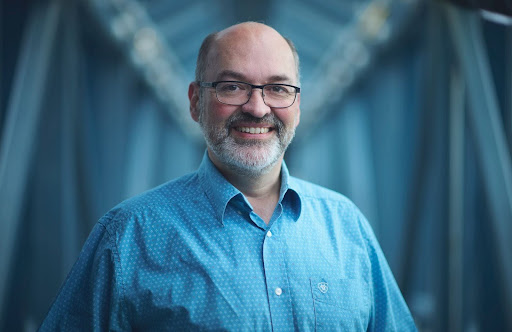
Kyle is a Professional Engineer with nearly 30 years of experience in electrical power systems, specializing in high-voltage transmission and large-scale infrastructure projects.
His experience spans the full lifecycle of transmission system development, including concept selection, detailed engineering, regulatory approvals, construction management, and commissioning. Kyle has worked on projects ranging from local capital upgrades to multi-billion-dollar transmission systems, with experience in AC systems up to 735 kV and HVdc systems up to ±350 kV.
Kyle has led and supported terminal station expansion projects up to 230 kV and has operational experience with hydroelectric facilities, remote diesel generation, and gas turbines. He is actively expanding his expertise in wind generation and energy storage systems.
He holds a Bachelor of Engineering (1995) and a Master of Engineering (2007) from Memorial University of Newfoundland and is a registered Professional Engineer with PEGNL.
About Angler Solutions Inc.

This course was developed in collaboration with Angler Solutions Inc., a Newfoundland-based consulting and technology firm providing professional services in the energy and ocean technology sectors.
Angler specializes in early-phase project development (FEL 1–2), supporting renewable energy, energy diversification, and electrification initiatives. The firm delivers integrated services including energy systems modelling, techno-economic analysis, grid interconnection assessments, infrastructure readiness studies, project management, and strategic advisory support.
Angler’s in-house Model for Energy Systems Optimization (MESO) enables advanced modelling and techno-economic evaluation of hydro, wind, solar, battery storage, hydrogen, and hybrid energy systems. MESO was the winner of Econext’s Clean Energy Optimization Challenge in 2025.
With strong local knowledge and partnerships across Canada, the UK, and Europe, Angler supports clients in de-risking early investment decisions and building credible pathways toward commercial energy projects.









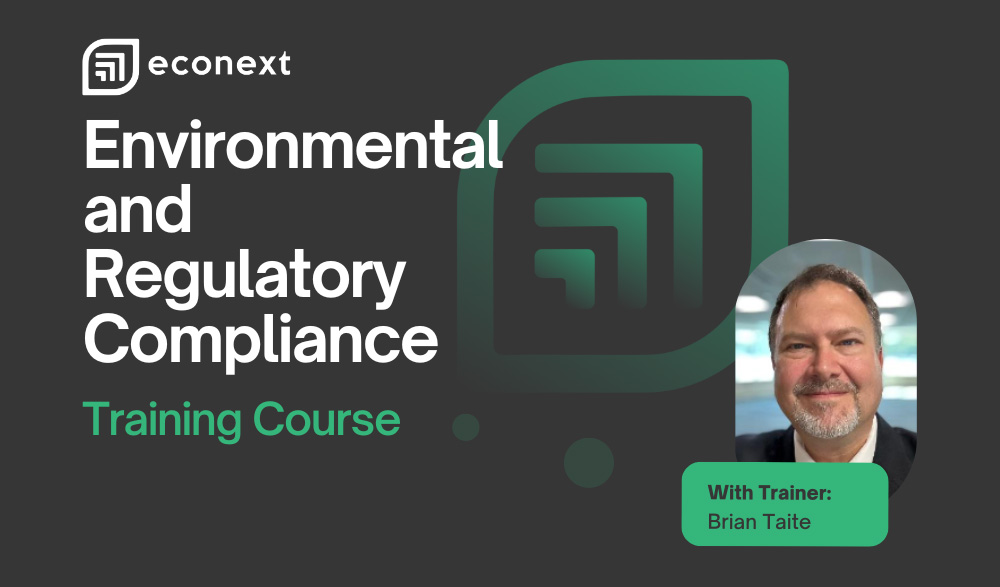
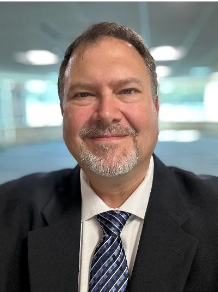 Brian is an accomplished and dedicated health, safety, environment & regulatory professional with over 30 years’ experience in the energy and mining sectors. Brian has been a consultant to several major mining and energy companies, government agencies and private industry for emergency preparedness and response, incident investigation, risk assessment, regulatory compliance, auditing, HSE planning and technical integrity assurance. Brian was educated at Memorial University and was admitted to the degrees of Bachelor of Science in Mathematics in 1992, Bachelor of Engineering in Civil Engineering in 1994 and Master of Applied Science in Environmental Engineering in 1999. Brian has been associated with econext since the mid 1990’s, having worked as an environmental consultant for over a decade in Newfoundland and Labrador. In 2006 he expanded his career in asset management with Shell in the UK and the Netherlands for over five years. Returning to St. John’s he worked with AMEC (WSP) as a senior environmental engineer and was soon after seconded to Rio Tinto’s IOC mine in Labrador City for his first experience in the mining sector. In 2012 Brian continued his mining experience with Vale’s Long Harbour Processing Plant as Operations Environmental Supervisor. In 2014 Brian joined WorleyParsons to develop an Environmental Management System for Alderon’s Kami Mine project and soon after took on a role as Environment & Regulatory Manager for the ExxonMobil Hebron Topsides Project. In late 2017, Brian went back to consulting at Pinchin Ltd. as Team Leader, Environmental Due Diligence and Remediation. In 2020 he became SHE Coordinator for the Vale Voisey’s Bay Mine Expansion Project construction of two underground mines in northern Labrador. In 2021 Brian worked with HMDC/ExxonMobil as the Environment Advisor for the Hibernia offshore drilling and production platform. Most recently, in 2024 he joined the World Energy GH2 team as the Environmental Compliance Manager for Project Nujio’qonik, pioneering Canada’s wind to green hydrogen industry as part of the global energy transition to clean fuels.
 Tom has significant consulting expertise with over twenty years’ experience in the field. He is currently a professor of Strategic Management at Memorial, teaching governance at a MBA level. Prior to taking his position at Memorial University, Tom worked as a senior manager with PricewaterhouseCoopers’ Performance Improvement Consulting and advisory practice in the United Kingdom and was team leader of their Governance, Risk and Compliance Financial Services practice. Since returning to Newfoundland and Labrador he has worked with a wide range of clients across different sectors predominantly focusing on strategic planning, training, and performance improvement. He is a Certified Management Consultant and teaches on the ICD program out of Rotman in Toronto. He is the past Chair of Food First Newfoundland and Labrador and sits on their executive committee, past Chair of SmartICE, and currently the Public Representative on both the boards of the Chartered Professional Accountants of Newfoundland and Labrador as well as the Provincial Health Research Ethics Authority Board for Genetics.